Homily for 15th Sunday in Ordinary Time (Year A)

By Deacon Richard Hay

“Enriching the Soil of our Soul”

Anyone here consider themselves a gardener?

Gardening is a continuum that ranges from those who do not consider their day complete without having dirt under their fingernails from working in the garden and those like me who are lucky to keep a plant green and alive. I am really good at making plants brown that aren’t supposed to be brown.

My wife Margo was the first kind of gardener with the greenest of thumbs. She could take plants that others were struggling to keep alive and have them blossom under her care.

Twice a year she would bring home about three hundred pounds or so of topsoil from the local garden store – the trunk of her Volkswagen sedan filled to the top, with the lid barely closed, and riding on the rear axle from all the extra weight.

Of course, it would be my job to distribute those bags around the garden so she could then come and work all of it into the existing soil so that the plants and flowers she loved so much could grow and flourish.

Gardeners know the importance of having rich soil in their flower beds, vegetable gardens and potted plants.

Today’s gospel, which we all know as the “Parable of the Sower”, is about the richness of our own soil – our own soul. It doesn’t matter if we have a green thumb or not because as we know – anything is possible with God.

We understand that Christ is the one sowing the seeds which are the Word of God. It is the Holy Spirit who cultivates the Word in us so we can grow our soul in the richest soil possible.

Those two words are very similar, aren’t they?  Soul and Soil. As someone pointed out to me, the only differences are the letters I and U and we are on this journey together.

The four different types of soil that we hear about have everything to do with the readiness of our own soul to hear, receive, and live what God offers us in the Word of God through Jesus Christ.

Life is a continuous journey of growth, sometimes we move forward and sometimes we might take a step backward, but God’s will for us is to always keep our eyes on Him, to grow in His love, and to be His people.

A gardener understands that a garden is also a continuous journey – not always at its best because of insects, weather and other things. Today’s parable provides an insightful way to see how our lives can parallel the life of a garden based on the richness of its soil.

In the gospel, as the seeds were sowed, we heard that some fell on the path. The seeds in this area are right there on top and exposed to all the elements. However, they are quickly consumed by birds and never get the chance to even sprout in the cracks of the path where there might be just a little bit of soil to start nourishing it. However, even if some of those seeds were to start growing in the cracks of the path – it is a tough existence, and someone is going to eventually come along and pull that plant out or chop it down with a weed eater.

This happens in our own lives when we hear the Word of God and do not understand it, do not take it into our own soul, do not act on it, and don’t seek to learn more. It never has a chance to take root and blossom.

Next, seeds are sown on the rocky ground. However, plants need soil so that their roots can provide nutrients and water to help them grow. Those plants may grow for a time in the rocky ground but eventually, without that rich soil, they are only going to grow for a very short time before they wilt and die for lack of roots.

Have you ever been challenged about your faith? Are we willing to stand up for that faith in the presence of ridicule or maybe the loss of a friend because of our beliefs? If not, then our soul is trying to grow without deep roots and can be easily persuaded to not stand up for the faith to avoid those persecutions that come from family, friends, and society.

The seed which is sown in the thorns is like the rocky ground but instead the plants trying to grow do not get all of the possible nutrients from the soil because the plants with thorns are taking it away and choking their roots.

Our soul experiences this when we hear the Word and understand what we must do to live it out in our lives, but we get distracted by worldly matters and the plants from those sown seeds never have a chance to bear any fruit.

Even when we experience these difficult & challenging situations for trying to grow rich in our own soul at different times in our lives, the Word of God can make the soil of our soul rich if we receive it, embrace it with love, and let the Holy Spirit cultivate it.

Gardeners know what will happen when seeds are placed in rich soil and are nurtured – they will grow and blossom and bear fruit for all to see.

I believe at some point in each one of our lives, we experience all four of these types of soil in our soul. In fact, sometimes we might move in between these different experiences depending on where we are in life and what we are facing. Life is not a straight line, growth that will produce abundant fruit takes effort and that is OK.

So how do we keep our own soil, our own soul, rich? We do that by grace.

Where do we get grace – through the sacraments that were given to us as a sign of God’s love for us.  

The church defines sacraments as effective “…signs of grace, instituted by Christ and entrusted to the Church, by which divine life is dispensed to us.”

In other words, the sacraments do what they say they do – provide us holiness and grace in our lives. By God’s power – they simply work.

That grace is even more important than the food that keeps our human bodies alive, because they enrich the soil of our soul so that we can bear fruit “a hundred or sixty or thirty-fold”.

Homily for 11th Sunday in Ordinary Time (Year A)

By Deacon Richard Hay

“God’s love for us…”

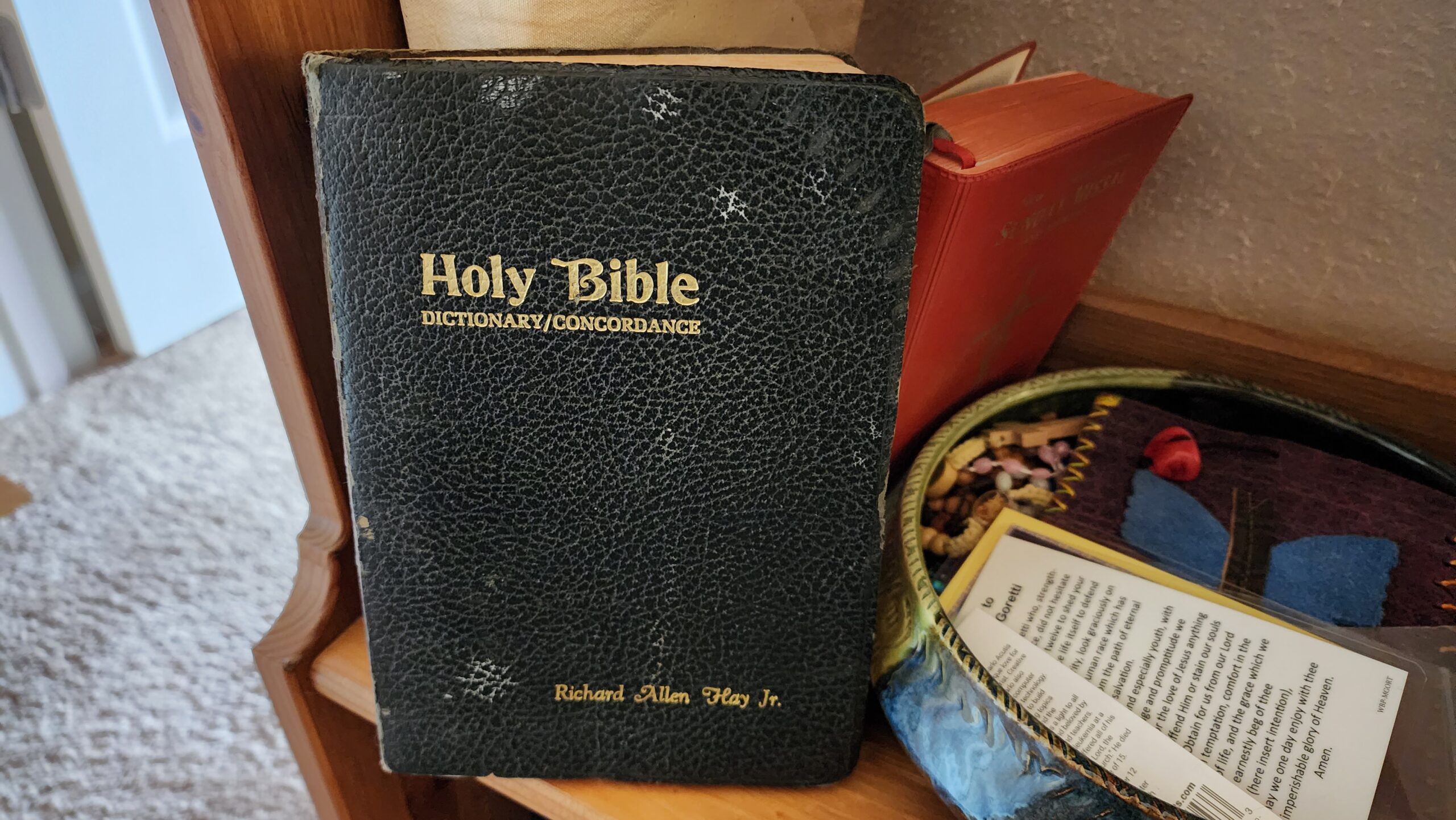
When I was a young kid growing up, my Mom and Dad would hold a bible study once a week and teach us about the stories and characters all throughout the bible – both in the old and new testaments. They had a system where if we could answer various questions about something we had learned or heard from the bible that week, we would earn points. Eventually, once we had earned enough points, we would receive our own bible that had our names embossed on them in gold lettering.

That bible is 46 years old; it survived a flood in 1979 and continues to be in my home on a bookshelf over these last 46 years.

I bring this up because the stories I remember the most from those bible studies were those from the Old Testament because they were so different than those in the New Testament. In the Old Testament there was a lot of murder, mayhem, disobedience, and turning away from God. Those are the kind of stories that catch our attention as children.

However, over time, as I learned more about the stories in the New Testament, those descriptions of God’s love, the gift of His Son, and the Holy Spirit, start to be a point of connection that makes more sense.

Then over time, we can start to see in the Old Testament that what appeared to be a vengeful God – was actually a God full of love for His people and today’s readings really bring out that love.

In Exodus, those words of God’s comfort show his care for His chosen people. He pleads with the Israelites to remember his outpouring of love, protection, and gentle leading during their desert journey.

Then in the responsorial psalm, we hear a call to give praise and thanksgiving for God’s care and we respond by saying that we “are his people – the sheep of his flock.”

In the letter to the Romans, St. Paul reminds us that God proves his love for us when he sends his Son to die on the cross even though we were still sinners. He also reiterates that there is no greater act of God’s immeasurable love than his Son’s crucifixion.

In the gospel from Matthew, we hear that the Lord was moved to pity for the crowds who sought him. However, that pity wasn’t like feeling sorry for someone, but it was much more like compassion because he saw that we were sheep without a shepherd, and he willingly accepted that role as our shepherd to lead and guide us so that we are not wandering aimlessly through life.

All of this was an initiative from God and not dependent on some humble display of worship, praise, trust or obedience on our part but a completely grace filled action in the covenant relationship he wants to have with us. It was a genuine commitment to our wellbeing – to our salvation – so that we could each have a personal relationship with him.

Jesus, in fulfilling his Father’s will on the cross, made every one of us worthy of his suffering and death – there were no exceptions – no one is left out of that gift. It doesn’t matter how unworthy we might feel at any given time in our lives. Christ died for you, for me, for all of us.

Nowhere else in this world are we going to find this kind of love. People and things of this world can be insincere, harsh, and hurtful in their words and actions. Even our most powerful relationships within our families – based on the deepest love as we understand it, pales in contrast. The love of Jesus Christ is sincere and unchanging – totally sacrificial – totally immeasurable.

Since Christ’s side of this relationship never changes, he is always there ready and waiting for us, it is our approach that impacts this relationship through our own choices out of the freewill given to us by God out of his love.

Sometimes, we might pray or make requests – or even demands – and we expect God to comply with these according to our will and desires. Of course, if it doesn’t happen, we can get discouraged and choose to go a different way or believe that God isn’t willing to hear us or answer our prayers.

This style of a relationship is when we see Jesus as Master – obeying because of rules, laws, or fear rather than having a relationship that is based on His love for us and our love for him. If we do have a true loving relationship with Christ – then he becomes our Lord and not our master.

The difference is that we surrender our lives and will to His will and obey his commands – not out of fear – but out of love.

With that act of surrendering, we then we become intentional disciples of Christ – it is a life changing kind of love.

All of this happens in a true personal relationship with Christ because the love of God has been poured out for us through Jesus. There was nothing we had to do to become worthy of that gift. It is there for each one of us to receive without question. We just have to say yes to that love.

One sign of his love for us was naming the apostles to lead the early church. Today the continuity of that act of love continues through our bishops, cardinals, and the Holy Father – through the laying on of hands over the more than 2,000 years of our church’s existence.

Out of that gift of love we also have all the sacraments that bring us God’s grace and help us in this earthly journey. Regularly receiving the sacraments will bring each of us closer to God in ways we might have never imagined.
The graces flowing out of those sacraments will carry us through the toughest days of our lives. Through tough and challenging family relationships, professional setbacks, and even the loss of loved ones.

It can sometimes be really hard to see those blessings as they occur, but time spent in prayer and reflection when we are facing hard times or afterwards, will reveal that God was always there alongside of us. He never abandons us – it is always us who walk away from Christ in those moments.

However, and here is the beauty of God’s love for us – it never fades, it never hesitates, it never grows weak – when we are ready to turn to God and ask for his love, strength, and forgiveness – he will be there in an instant. He holds no grudges because we may have turned away – He is compassionately in love with us and rejoices that we have turned back to him.

Despite being flawed – we are called.

Despite being troubled – we are not abandoned.

Since we needed a shepherd – Christ became our shepherd.

Although we may get discouraged – there is always hope.

Our lives change when we have love, kindness, and compassion but only when it is directed towards others and not ourselves.

All of this helps us to become willing laborers in God’s vineyard – where the harvest is plentiful, but the workers are few.

The final question is this: How will each one of us take the unconditional love of God and turn it around to others as we make our own efforts as laborers to help with the harvest in God’s vineyard?

Homily for Solemnity of the Ascension (Year A)

By Deacon Richard Hay

“Commissioning the Church”

At the commissioning of a United States Navy ship, everything happens on the pier next to the ship during the ceremony. The crew is there in their best uniforms, honored guests are seated along with the new ships leadership and speeches are given. Then, just towards the end of the commissioning ceremony, an order is giving to “Bring this ship alive!”

At the sound of this order, the officers and men of the crew break out of their formation and rush onboard to stand along the edge of the ships main deck side by side – we called this “Manning the rails”. All these men and women are called “plank-owners” because they are members of the ships first crew.

Today, on this Solemnity of the Ascension, the four verses we hear in today’s gospel are the last verses in the 28th and final chapter of Matthew which is actually only 20 verses long itself. It is a short chapter but encompasses the days between the resurrection and the Lord’s ascension. These last four verses make up what is known as “The Great Commissioning.”

This is where Jesus tells the apostles to “bring the ship alive!” – the ship that is God’s church and they are the “plank-owners” of this new missionary church that is to “make disciples of all nations.”

This commissioning doesn’t happen on a pier but on a mountain – whenever Jesus showed His Glory there was almost always a mountain involved and His ascension is no exception.

We hear that when the disciples saw Jesus, they worshipped him but also doubted. Earlier in this final chapter of Matthew, the disciples had heard from the two Mary’s that they had seen the risen Lord and that He wanted them to meet Him in Galilee. We have read other accounts in the gospels that the apostles encountered the risen Jesus many times during those forty-days after Easter – yet they still doubted. The lesson for us is that as long as we don’t dwell in it, doubt is going to happen and that is OK – at least for a short while.

Christ knows their doubt and that is why he approaches them – gets close to them as He prepares to commission them. They are told to go make disciples of all nations; to baptize them in the name of the Father, and of the Son, and of the holy Spirit – the same words we hear during the Sacrament of Baptism. Jesus then adds that the disciples should teach all the nations to observe all that he has commanded them. Finally, just before his ascension, He reassures the disciples that He will always be with them until the end of the age.

That is a lot happening in just four verses however, it gives us a wonderfully rich understanding of our own commissioning as Christians, commissioning’s we experience regularly throughout our faith life and that we should act on daily.

The first commissioning we receive is at our baptism. If we were baptized as a baby, then our parents and godparents accepted that commissioning to raise us in the faith, to keep God’s commandments so that we may love the Lord and our neighbor as Christ taught us to do. Those same promises were made by anyone who was baptized as a young child or adult and then they were sealed with the Sign of the Cross and anointed with Sacred Chrism Oil as we were received as members of the Body of Christ.

Another time in our faith journey when we have a commission is after receiving absolution in the Sacrament of Reconciliation – one of our repeatable sacraments. In the words of The Act of Contrition, we pray that we firmly intend, with the help of the Lord, to do penance, to sin no more, and to avoid whatever leads us to sin. It is a form of self-commissioning but one we do not take on alone because Christ is with us to help. When the priest says Go in peace at the end of our confession, that is also a commissioning and how we should go out and approach our lives within the world.

At Confirmation, we are once again commissioned, this time through the words of the bishop as he extends his hands over us and calls on the Holy Spirit to be our helper and guide, to give us a spirit of wisdom and understanding, a spirit of right judgment and courage, a spirit of knowledge and reverence, and to be filled with a spirit of wonder and awe in the presence of God. The Holy Spirit we first received at our baptism, is affirmed in us through confirmation, and provides us a guide as we venture forth into the world to share the good news. 

In the Sacrament of Matrimony, couples are commissioned to celebrate fruitfully the mystery of the union of Christ and the Church, to live it rightly, and to bear witness to it publicly before all. In addition, when they both embrace the conjugal life there is another commissioning in accepting and educating their own children, they then help one another to become holy through that process.

Finally, every time we attend the sacrifice of the Mass, after the final blessing, the dismissal is when the priest or deacon commissions us as we are sent forth to announce the Gospel of the Lord or to go in peace glorifying the Lord by our lives. Commissioned to live our lives in Christ as examples of His love and forgiveness in our homes, workplaces, schools, and everywhere else we are in the world.

After receiving all of the other commissions through the sacraments, this is the one which gives us a regular reminder of our role in the Church. We are to be the hands and feet – the Body of Christ in the world. This is why attending mass regularly to receive the Lord in the Eucharist and to be sent forth is so important. As I have said before, attend as often as possible because the Eucharist is another of our repeatable sacraments.

Just before Jesus ascended into heaven from that mountain, He reminded the apostles that he would be with them always. That would be Him leaving the Holy Spirit, the first Pentecost, as their strength – there is a reason the Holy Spirit ties together everything we do in the church – He is the thread that ties it all together from the beginning of time until now and beyond.

Just like he said to the apostles, the Father and the Son are with us always through the presence of the Holy Spirit in our lives and every time we participate in the sacraments, attend the celebration of the Mass, and are sent forth to announce the Gospel of the Lord. Every time we approach the Holy Eucharist and say Amen, we are professing that faith and belief in the true presence of Christ in the Eucharist. That gift is intended to feed and sustain us as we carry out our own commissioning by the Lord – to share our faith with others.

So, here’s the question to take away today, how will each one of us carry out our roles as members of this church’s crew, the plank-owners in this local and universal Church, to fulfill the commissioning that Christ himself gave each one of us and continues to send us forth with today and every day of our lives?

Divine Mercy Sunday Reflection

By Deacon Richard Hay

When I was asked to give this reflection, I initially thought I might approach it much like a homily that would be given on Sunday. However, after praying about it, I felt called to share and reflect on how mercy has impacted my life.

Mercy is an interesting thing because, at least for me, I didn’t recognize some of these mercies when they were happening – it was only afterwards that I came to understand the mercies received and how they led to other mercies.

In the last year, I believe that I have received more than my own share of God’s mercy – most particularly around everything with Margo’s diagnosis and death last year, my ordination, and the months since as I have served as a deacon here at Sacred Heart.

In hindsight, I can even look over the three final years of my formation in the permanent diaconate and now see the mercy and grace God gave Margo and I individually and as a couple – in our faith – to build up mercies that we would need to sustain us later.

At the time, we of course did not know what the future held for us but looking back now – with the eyes of faith – I can see those instances of mercy we were graced with in preparation for the final two months of Margo’s life and the way we approached her diagnosis and prognosis – praying for a miracle each and everyday but acknowledging that God’s will be done.

Of course, until her diagnosis, we were approaching life with the expectation that I would be ordained and serve as a deacon somewhere in this diocese. So, the mercies we were encountering were welcomed but we felt they were preparing us for that expectation – life as a permanent deacon alongside of his wife.

However, all things are in God’s time and in His will – so these mercies were and are part of His greater plan – a plan He has for each one of us – we just have to be paying attention at some point.

The mercies I want to focus on for this reflection are those which we received in and through prayer.

For years, Margo and I had tried to start praying together more than just at meals or when a situation occurred that prompted us to pray.

Even those would be very quick acknowledgements of the prayer needed as opposed to intentional prayer being offered. Attending Mass together as we did was also a form of prayer but not what we were trying to do over the years.

As formation for the permanent diaconate began in the fall of 2018, we aspirants were told that we should begin praying the Liturgy of the Hours – specifically Morning and Evening Prayer – because those two hours would be an obligation on our part following ordination. We were also encouraged to do it as a couple if possible.

I began that fall and Margo started joining me for Evening Prayer at the beginning of 2019. Spending that time together, praying the prayer of our universal church, was a mercy in so many ways.

By the way, if you want to understand about having mercy for someone else, try learning how to navigate the pages and ribbons of the Liturgy of the Hours. This was indeed something that required mercy from each of us to be patient with the other as we learned. Those beginnings of sharing Evening Prayer together resulted in us choosing to convert one of our spare rooms into a dedicated prayer room. We also began praying a daily rosary together and other devotions including the Divine Mercy Chaplet after we learned more about St. Faustina at a mission held at St. Luke’s.

As we continued prayer together, we noticed that suddenly we were more likely to talk about scripture we heard at Mass, or something we read during prayer, or a faith related subject – conversations we had never really dived into before – and not superficial discussions. So now,  the mercies we received through prayer – specifically through our prayer together – our faith dialogue with each other was deepened and expanded.

The mercies we gained through prayer together also helped prepare us for when Margo suffered the debilitating cervical pain which she had from late 2021 until she had surgery and fusion of two sets of vertebrae in her neck in May of last year. During those months, that sometimes meant she was just present as I prayed Evening Prayer. It also shifted my role at home to caregiver more often. Margo received mercy to allow herself to be cared for as she was fiercely independent and I received mercy to be patient with her. It was easy for me to slip into selfishness though, but I was also blessed to receive mercy in the sacrament of reconciliation when I failed.

There was mercy received because I have a job that allowed me to be at Daily Mass before and after my ordination. That enabled me to take the Eucharist to Margo each and every day when she was basically homebound. Truly what ended up being food for her journey.

There was mercy when she finally had her cervical surgery last May and started to heal from the fusion and was able to be present when I took my vow of obedience to the bishop at our pre-ordination retreat mass.

There was mercy in the form of Bishop Estevez, whom I had just shared Margo’s terminal diagnosis with during our one-on-one meeting that same day. The mercy he shared with me and later with Margo was the shepherd caring for the sheep. He sat with Margo at dinner after that mass and they just chatted about living in Italy, going back and forth between Italian and English as they talked. Nothing about her diagnosis – just normality. That mercy filled my heart as I watched them.

Then there was the mercy of Margo being pain free three weeks after her cervical surgery and able to fully participate at my ordination. That was such a blessed weekend in so many ways.

My ordination was merciful in another way because now I was not only able to continue bringing her communion each day but I could now offer her my blessing as an ordained deacon in the morning when she woke up and another at night before she went to bed.

A week after my ordination, her oldest son came for a visit and they had a great week together – another merciful blessing.

It was not long after he left that Margo started to decline and eventually had to go into the hospice in-patient facility for her final days.

If you want to see mercy in action, the nurses, aides, and staff at the Hadlow Center are angels who walk on this earth in their vocation to care for others during the most vulnerable time in their lives.

For those last six days, God’s mercy was present each day around Margo and our family. From the friends and family who came to visit and say goodbye, the messages and calls which we shared with her, to those who stopped in to pray with us – we were surrounded by mercy – most especially in Margo’s final anointing – and our ability to be at her bedside in those final minutes – praying the rosary as she asked us to do.

After her death, while we were still in the presence of her earthly body, I received even more mercies as I was able to offer our church’s blessing and prayers for her mortal remains.

There have been so many mercies received and I could go on and on about them but let me close with this observation.

God’s divine mercy abounds – it is all around us and those mercies are unconditional – just like his love for us. They are present even when we might not recognize they are there but let me tell you from personal experience, if you are able to reflect about those experiences you will see them, feel them, and experience them – they can and will bless you beyond all measure.

Homily for Second Sunday of Easter – Divine Mercy Sunday (Year A)

By Deacon Richard Hay

“Seeing is believing…”

          Two sayings we are all likely familiar with come from today’s gospel:

          “Seeing is believing” and “Doubting Thomas”.

As we hear, Thomas is not present when Jesus first visits the apostles in the upper room after His resurrection. However, when Thomas once again joins them after the Lord’s appearance, they quickly share with Thomas that they have seen the Risen Lord. Thomas then responds as many of us might have responded to such unbelievable news – that he will need to touch Jesus’s wounds to believe.

I find that a fascinating response, don’t you? Thomas has been around the other apostles for three-years as they travelled the local countryside right alongside of Jesus. Suddenly, he doesn’t seem to believe or trust what they are telling him.

However, it isn’t hard to understand why Thomas responded as he did, is it? Remember, as I mentioned last week in my Easter homily, the apostles were experiencing this in real time and did not yet fully understand all of it.

Thomas does get his chance to see and believe that Jesus is risen when He once again appears to the apostles in the upper room. He immediately addresses Thomas and offers His wounds for him to see and touch so that, as Jesus says to Thomas, he does not remain “unbelieving, but believe.”

Thomas then gives one of the most beautiful responses: “My Lord and My God.”

That moment of acknowledgement and belief is powerful and many today still use that same phrase to acknowledge Christ’s presence when they encounter Him in the Eucharist.

Jesus’s reply to Thomas after this exchange – “Blessed are those who have not seen and have believed.”

Jesus is talking about us and everyone else who chooses to believe in Him after his ascension into heaven. All those over the centuries who have not seen the physical bodily presence of Jesus, that was made in our likeness, but yet they still make the decision to believe.

Thomas had the opportunity to see the Risen Christ which turned his doubt into belief but how do we do that today in our faith lives?

Believing without seeing is not an easy task, is it?

Paul’s first letter to the Corinthians lays out three simple words that, when we look into them, are precious gifts from God that help us to believe, and he shares them in the thirteenth chapter of that letter.

Paul has just written about the attributes of love, scripture we often hear at weddings, many of you likely know it “Love is patient, Love is Kind…”

He ends with this verse – “So faith, hope, love remain, these three; but the greatest of these is love.”

“Faith, Hope, and Love”

Let’s start with Faith.

We are blessed to have vast deposits of faith from the Church that helps sustain our faith and plenty is provided for us to “see and believe…”

          The sacraments are our starting point. Although we do not have the benefit of Jesus’s physical presence after the resurrection like the apostles did – we have these beautiful sacraments that He left for us as signs of God’s grace and mercy.

Baptism, Confirmation, Matrimony, Holy Orders, Holy Communion, Reconciliation, and Anointing of the Sick.

These sacraments bring us to belief in God our Father and Jesus Christ His Son through the outpouring of the Holy Spirit in each one of them.

As you have heard me say before, those last three are repeatable sacraments – Holy Communion, Reconciliation, and when needed, Anointing of the Sick – receive them often to receive God’s mercy and let Jesus accompany us on this earthly journey of faith.

How about Hope?

Hope is integral to our faith. The hope I am speaking of is not a wishful hope – like “I hope the Jaguars win the Super Bowl”.

No, the hope Paul is referring to is the “I hope in the resurrection” kind of hope – as in to be a part of it – I look forward to it.

St. Thomas Aquinas wrote that our resurrected bodies will be glorious beyond imagination. We will never age, require no food, never experience illness, be free from all disorders and will live this way forever.”

That is the kind of hope Paul is referring to in Corinthians and it should also be the hope we carry with us in our belief in Jesus.

Love – “the greatest of these is love.”

Where would we be without the love of God?

The love of God to not only create the universe we live in but to also create us in His likeness and image.

The love of the Father to send His only begotten Son to become fully human and still be fully divine as the Son of Mary. Ultimately, offering Himself on the cross for our sinfulness.

“There is no greater love than to lay down one’s life for a friend.”

The love of God in Christ’s full presence in the Most Blessed Sacrament – Jesus’s body, blood, soul, and divinity in the Eucharist.

The love of Christ who doesn’t appear to the apostles in his resurrected body to chastise them for abandoning Him at the cross but to offer them peace and the gift of the Holy Spirit which comes from the love of the Father and the Son – to accompany them and us on our journey – to strengthen our faith and belief.

The love of the gift, graces, and mercy of the sacraments that the Church received from God the Father through His Son Jesus to sustain us on our journey.

Finally, the love of the two most important commandments Jesus gave us:

“You shall love the Lord your God with all your heart, with all your soul, with all your mind, and with all your strength” and the second “You shall love your neighbor as yourself.”

So, as we all leave here and head into the world, carry the faith, hope, and love of God’s Divine Mercy and remember as Jesus said to Thomas and now to all of us, do not remain “unbelieving, but believe.”

Homily for Easter Sunday 2023

By Deacon Richard Hay

“He is Risen – Risen indeed! Alleluia – Alleluia.”

What a glorious proclamation!

Our journey through Lent is complete, we can once again proclaim alleluia as we rejoice entering the time of Easter to celebrate the resurrection of Christ. We also celebrate our new brothers and sisters who received the sacraments of baptism, confirmation, and first holy communion last night at the Easter Vigil and who have now joined the Body of Christ to continue their own faith journeys as part of Christ’s church and this community – our parish.

Many of you might remember a radio show hosted by Paul Harvey where he told “The Rest of the Story”. He would share these tales of unique circumstances behind events in the world that had some sort of historical significance or were about a well-known person. Well, today – on this Easter morning – through our readings and the gospel, we come to realize that the apostles could have used an episode of Paul Harvey telling them the rest of the story on that first Easter morning.

We begin today hearing once again, as we do each Easter Sunday, Peter’s account of Jesus’s life from when Jesus was baptized by John in the Jordan River, his three years of ministry, his passion, suffering and death on the cross, his resurrection and then his commissioning of the apostles to carry the good news to all ends of the earth.

Do you know why and to whom Peter was telling this story?

He was telling it in the home of the roman centurion named Cornelius who had his entire family and servants present to hear it. Shortly after Peter finished the story, the Holy Spirit comes down upon all present and Peter then baptized the entire household in Jesus’s name. The members of Cornelius’s family and household were obviously on a journey to belief in Christ and made it together resulting in Peter’s visit.

After our own Lenten journeys over these past forty days, we have also experienced Jesus’s life in a very particular way, especially through his entrance into Jerusalem to shouts of Hosanna on Palm Sunday, and then the most holy Easter Triduum from Holy Thursday, through Good Friday, and in the quiet of Holy Saturday. We have now arrived at the empty tomb and the promised resurrection of our Lord and Savior Jesus Christ.

However, for the apostles’ things must have felt very different because they did not yet know the rest of the story quite yet – but as we know – very soon that will happen.

But first – can you imagine the emotions that the disciples went through early on that first Easter morning outside of Jerusalem at the tomb? Remember, they were actively living this experience in the flesh – we on the other hand are blessed to already know how this story ends – but the apostles – they didn’t have that knowledge yet.

Mary Magdalene’s first reaction in John’s gospel, when she finds the empty tomb, is to run and tell the apostles that the body of Jesus had been taken from the tomb – that it had been stolen – what else was she to think in that moment?

This news prompts Peter and John to run to the tomb themselves to see what Mary has witnessed.

John arrived first and slowly knelt down and cautiously peered into the darkness of the tomb through the opening and saw Jesus’s burial cloths right there where they had laid Jesus on Good Friday after His death on the cross. I’m sure John was still trying to understand what he was seeing when Peter caught up and went straight into the tomb, without any hesitation, to also then see its emptiness and the burial cloths that were left behind.

At this point Peter did not fully comprehend what he was seeing. It must have been frightening to find Jesus’s body missing, but, as John will write in the gospel that bears his name many years later, they did not yet fully understand that Jesus had to rise from the dead.

To them, in that moment, this was just another bad situation piled on top of the last few days as they watched their master be betrayed, judged, tortured, and then die on the cross.

That walk back into Jerusalem must have been so heart breaking. All they had were each other as witnesses of what they had seen over the last few days and now the body of Christ is gone from the tomb. Can you feel what that emptiness must have felt like in your own hearts? In that moment, the disciples were likely experiencing a deep hurt and confusion.

As I mentioned earlier, we already know the end of the story. We know that Jesus was not in the tomb because his heavenly Father, our God, raised him from the dead as he promised to do. We are able to rejoice in this moment, on this glorious day, because we know the rest of the story. The apostles would finally know the rest of the story themselves when Jesus appears to them later in the upper room.

At that point, they are also finally able to understand and rejoice in Christ’s resurrection.

Today, as we also rejoice for the empty tomb and the resurrection of Christ, it is now time for all of us to continue this journey, to continue this story and carry the Easter message of Christ out into the world because it is not a finished story – it is still being written – each and every day and we are to go out and show that we are disciples of the Risen Christ, that we are a resurrection people by the way we love each other and our neighbor.

Embrace this Easter season – find and experience new ways to celebrate the gift of Christ’s passion, death, resurrection, and the gifts and graces that come from His sacrifice. He wants to embrace each and every one of us close to his heart – and that love is not seasonal – it is unconditional and forever.

We do this because as it was promised:

He is Risen – Risen Indeed! Alleluia – Alleluia!

Homily for Fourth Sunday of Lent – Laetare Sunday (Year A)

By Deacon Richard Hay

“Are we there yet?”

When I was growing up with five brothers and sisters near Louisville, Kentucky in the 70’s, my maternal grandparents lived in the southwest corner of Kansas in a city called Syracuse – roughly a 1,000 mile trip in one direction.

Back then my parents had this massive station wagon that we called the Brown Bomber because it was so big and well – brown. It made that trip multiple times and there was always drama including losing a wheel once coming off at an exit for lunch and having to push the car home at the end of one trip for about a mile because we ran out of gas.

The very back of this station wagon wasn’t used for luggage – it had two seats back there which faced to the rear of the vehicle so you would see where you had been rather than where you were going. I loved sitting back there on these trips.

No matter what type of car any of us have made these types of trips in, there are a couple of common aspects to these journeys.

First is the ever-persistent question – “Are we there yet?”

Second is that the trip to our destination always seemed to take much longer than the trip home.

That is why some of you might be thinking – “Has it really already been four weeks since Lent started?” and others are thinking “Has it really only been four weeks since Lent began?”

While we are all considering our progress for this forty-day period of Lent and how fast it is coming or going, there is another group in our midst that has been on a journey towards Easter that has been much longer – the catechumens and candidates – now the elect – who will receive the sacraments of initiation – Baptism, Confirmation, and Holy Communion at the Easter Vigil. Many of them have been on this journey for the last year or even longer.

This weekend, they will participate in the second of the three scrutiny’s as they continue this long journey to join us in full communion with the Church. We should all continue to offer our prayers of support for each one of them and you can see all their names out in the Narthex. For all of the elect and all of us, the answer to this journey’s “Are we there yet?” question is – almost.

Today is the Fourth Sunday of Lent, also known as Laetare Sunday, just past the midway point in our journey to Easter. With three more weeks to go, it is a good time to evaluate how our own experience of Lent has gone so far – to evaluate how fruitful our season of prayer, almsgiving, and fasting has been so far.

If it has gone well – then give thanks to God for that and of course, also ask for continued blessings in these final weeks of Lent.

If things have been a bit more challenging, then give thanks for that too because that usually means growth is happening. Offer prayers of thanksgiving for that as well.

If necessary, anyone of us can also change our plans for Lent – that is OK too.

In the first reading, we hear the story of Samuel anointing David as the new king of Israel. We are reminded that God sees beyond our outward appearance and peers deep into our hearts. David was the youngest and smallest of his brothers, but God chose him to be king because of his great faith. It wasn’t about his size or looks. This is a reminder that God can use anyone, regardless of their background or circumstances.

In the second reading, St. Paul reminds us that we were once in darkness but are now called to live as children of light. He encourages us to live in that light, which means living in the truth and avoiding sin. This can be difficult at times, especially when we are tempted to give in to our desires or when we are faced with challenges and struggles. But St. Paul reminds us that we are not alone in this journey because Christ has redeemed us and has given us His grace and strength which we receive through the sacraments.

In the Gospel reading, we hear the familiar story of the blind man who is healed by Jesus. While there are multiple layers to this story – the bottom line is that Jesus’s healing power has the ability to transform our lives. The blind man represents all of us who are spiritually blind, who are unable to see the full truth and beauty of God’s love. But when we turn to Jesus and ask for His help, He can open our eyes and help us to see.

As we reflect on these readings, we are encouraged to examine our own lives. Are we living in the truth and avoiding sin?

Are we seeking God’s plan for our lives, even if it means going against the norms of society?

Are we asking Jesus to heal our spiritual blindness and to help us see the full truth and beauty of His love?

As we pause and think about our relationship with God and approach these final weeks of Lent, remember that this is a time of repentance, renewal, and preparation. A time for us to turn away from sin and to turn toward God’s mercy and grace, while making changes that will bring us closer to Christ – changes that will hopefully last beyond Lent.

Remember – we are called to be like David, who was chosen by God to do great things even though he was the youngest and smallest of his brothers.

We are called to be like St. Paul, who lived as a child of light and who encouraged others to do the same.

We are called to be like the blind man, who had the courage to ask Jesus for help, was healed and later professed Him as Lord.

As we continue our journey through Lent, remember that God loves each one of us and that He is always there for us, no matter what.

However, It is up to us, just like it was to the blind man, to profess – “I do believe, Lord.”

Homily for Ash Wednesday 2023

By Deacon Richard Hay

“Lent?”

What exactly is Lent?

Yes, it is the forty-day period that we observe before Easter and it is also the period during which we are encouraged to spend more time focused on praying, fasting, and almsgiving to grow closer to Christ as we hear in the gospel.

However, the question I am asking is what exactly is Lent for each one of us.

Is it just dates on a calendar that we make our way through until Easter arrives? Is it just a period of time where we might give up chocolate, coffee, soda, social media, or some other thing because that is what we have always done during Lent in the past?

It might be time to try a new approach to Lent. That it not just be days on the calendar, or simply giving up something just for the sake of giving something up.

It is important to put some thought into why we are doing these things, into why the church provides this period of forty days on the calendar, and how we can individually and as a faith community spend this time truly growing closer to God which is why this season exists.

In his message for Lent this year, Pope Francis writes – “Lenten penance is a commitment, sustained by grace, to overcoming our lack of faith and our resistance to following Jesus on the way of the cross.”

The Holy Father goes on to say that “tradition is a source of inspiration for seeking new paths and for avoiding the temptation of immobility.”

In these two short passages, the Pope is providing a roadmap for Lent.

First is commitment. Commitment needs to be taken to the next level and rather than just giving something up, what about adding something in our faith life. For instance, at Sacred Heart each Friday in Lent there will be a soup supper followed by stations of the cross – one of our Church’s traditions. Maybe another option is to spend more time reflecting, praying, and meditating on scripture, or learning how to pray part of the Liturgy of the Hours.

Next, how can grace be sustained?

Well, where does grace come from? It comes from the sacraments. During Lent we can grow closer to the Lord and be strengthened by grace through reception of the sacraments – in particular the Eucharist and Reconciliation. There will be multiple opportunities for reconciliation here and at other neighboring Catholic churches during Lent. In addition to our weekend schedule, we have daily masses Monday through Friday to receive the Lord in the Eucharist but Jesus is also always present in the tabernacle, and all are welcomed to stop in the church during the day to spend a little quiet time in prayer with Him.

To overcome our lack of faith and resistance to following Jesus fully to the cross, the answer is all of the above. Scripture, prayer, and receiving the sacraments for their sustaining grace.

Finally, the Holy Father mentions seeking new paths that help us avoid past immobility.

In other words, choose to not stick with the status quo but try something new for Lent. Our church is full of traditions and devotions that can be adopted and learned. It is easy to be comfortable with past approaches to Lent. The question to ask ourselves, is did those efforts become new ways for us to be devoted and closer to Christ and were they sustained after Lent was over?

If the answer to either of those questions is no – then it is time to consider a new approach during Lent because ultimately, if nothing changes – then nothing changes.

The goal is not to survive Lent but flourish by growing closer to the Lord and by seeking penance for our sinfulness. Our efforts in the next 40 days and beyond will allow the Lord to mold our hearts to be more like His and that will prepare us to celebrate the Easter mysteries. As a result – just like the Lord promised – our reward will be great in heaven.

Homily for Third Sunday of Ordinary Time – Word of God Sunday (Year A)

By Deacon Richard Hay

“Scripture, Light, and Our Call”

Today, my homily has three parts – almost like three mini homilies in one – but I promise it will not be three times as long!

A few years ago, the Holy Father declared that the Third Sunday of Ordinary Time, today, would be observed as Word of God Sunday. The intention is to remind us to celebrate, study, and spend time with the Word of God. It is an opportunity to emphasize the importance of holy scripture in the life of the church and in our own lives.

The running joke has always been that we Catholics never read our bibles. That has changed significantly though, because many Catholics do spend time with scripture for prayer and reflection. However, the joke had some shortfalls because it assumes that Catholics never hear holy scripture.

While many Catholics might not have been reading the bible themselves – every Catholic who attended any Mass was hearing right from the scriptures. The obvious places were the readings, responsorial psalms, and of course the proclamation of the gospel.

We hear even more from scripture as the priest says the words of consecration at the altar in the person of Christ – the same words that are throughout the gospel accounts of the last supper when Christ instituted the mass on Holy Thursday.

We hear scripture each time we come to mass and as the mass is the source and summit of our faith – that is a very good thing.

Could we spend more time with holy scripture outside of the mass – absolutely and we should. That could be as simple as praying over the readings for the mass at home or here in the pews even as you wait for mass to begin. Maybe join Fr. Mike’s weekly bible study or use the numerous resources the church provides on the web about scripture. The goal is not to become a scripture scholar – but to simply spend a little more time reading and praying over the scriptures and letting those words speak to our hearts and our souls. As always, make sure to spend quiet time afterwards and give God a chance to speak to us through the holy scriptures.

One of the themes of our readings and gospel today is about light and darkness – something we hear of very often throughout scripture. The connective thread from the first reading, which is from Isaiah, is the prophecy that reads the people who walked in darkness have seen a great light; upon those who dwelt in the land of gloom a light has shone. Then, in the gospel, is the fulfillment of that prophecy thru Jesus’s ministry.

The truth is that darkness cannot overcome light. If we walk in the light of the Lord and share that light – share that faith with our families, friends, our fellow parishioners, and even the strangers we meet – then darkness cannot overcome us. Next week, we will hear from the Gospel of Matthew about the Sermon on the Mount when Jesus shares the Beatitudes. There is a scripture verse just after that where Jesus reminds the crowd that we do not light a lamp and then place it under a bushel basket – instead that lamp is placed up on a stand where it gives light to the whole house.

That is the kind of light we all should work to be in our lives – one that is bright and lights up wherever we might find ourselves.

The second theme from this Sunday’s scripture is about vocations – we heard in the gospel how Jesus walked up and called Simon, Andrew, James, and John right from their fishing boats – and how did they react when called?

Did they challenge Jesus and ask – are you talking to me – a simple fisherman? No, they once and immediately dropped their nets and what they were doing and joined Jesus – no hesitation – no thinking about it – they just did it.

Feels like a scary proposition, doesn’t it? Just dropping everything that we know of our own lives and unconditionally following someone who walks up and just asks us to do so.

I recently shared about my own vocational call to the diaconate with the Council of Catholic Women here at Sacred Heart. I told them after joining the Catholic church in May of 1987, I started to be prompted about ordained service in the church. I even at one time told Margo that I thought I might have liked to have been a priest.

I managed to push that call aside for almost 20 years before finally saying yes in 2008. Whether it was my own disbelief in being truly called to such a vocation or fear of what it might mean to follow that calling – I managed to keep it at bay until one day during Eucharistic Adoration when I clearly heard the voice of God say to me “When are you going to hear my call?”.

Those words in that moment were as clear as any indication I had been given over the previous twenty years – but in that moment I believe I was more ready to hear them – more ready to trust them because of my own growth in faith.

God is persistent and patient – whether He gets you to drop everything you are doing in that very moment to follow him like the apostles did or He waits 20 years for it to happen – if he is calling us to be part of the light of the world – I don’t believe there is any way to ultimately deny His call. We have to be willing to open our hearts and say yes to our own vocation whether that is as a priest, deacon, religious, husband, wife, parent, single, or any other number of ministries in the church.

It all begins with our “yes”.

Our yes to holy scripture, our yes to being light in the world, and yes when Jesus calls us.

Homily for Christmas Day 2022

By Deacon Richard Hay

“Anticipation and Expectations of Christmas”

Anticipation and expectations are big aspects of today’s celebration of the birth of our Lord.

Our four-week journey through Advent helped prepare us in anticipation of our Saviors birth as a baby in a Bethlehem stable. There were plenty of expectations leading up to this day as we have heard in the readings. However, we also learn that God’s plan is not always our plan.

Caesar Augustus for instance was expecting his rule over the Roman empire to continue unfettered as he ordered a census to count everyone to make sure the proper taxes were being collected. He believed himself to be in control of the “whole world” – little did he know that was going to change in God’s plan.

Mary and Joseph, having said yes to God’s call to bring Jesus into the world, had their own expectations. Likely that included quiet family time in their hometown of Nazareth and the arrival of Jesus. However, they are required to head to Bethlehem for the census and end up being there when it is time for Jesus to arrive. They were surely not expecting to begin their family out in a stable using a feeding trough as a crib, surrounded by animals, but that ended up being part of God’s plan too.

The shepherds out in the fields were certainly not expecting the night sky to suddenly be lit up with a multitude of angels singing “Glory to God” and announcing the birth of a savior. In fact, as we hear in the gospel, they were already “keeping the night watch over their flock.”

Shepherds were counted at the low end of society in those days. However, they were elevated in God’s plan by being the first to hear of the birth of Christ.
All of this was God’s plan – none of it was accidental or a coincidence – it was in fact intentional in fulfilling the Old Testament prophecies surrounding the birth of Jesus.

What about our own expectations? Things like…

  • Getting the shopping done for the meals and presents
  • Getting the house ready for family and friends
  • Getting to the various Christmas parties, the kid’s concert at school, plus of course the kids expectations approaching Christmas such as gifts, and being with their friends, etc. – it can get very busy and sometimes distracting.

The world around us has expectations as well, such as how quickly everything can shift from Christmas to the next holiday – Valentine’s Day in this case – and yes – I have already seen at least one retail store making this shift last week even before Christmas arrived.

This time of the year requires patience on our part so we can not only prepare for the arrival of Jesus but to also celebrate His birth.

In fact, the church plans for that. While the world approaches Christmas as a single day on the calendar – we celebrate what is called the Octave of Christmas – an entire week of liturgies celebrating the birth of Christ. It allows us to hold onto Christmas in a very unique and purposeful way, while the world around us moves on. It begins today and ends next Sunday with the Solemnity of the Blessed Virgin Mary, Mother of God.

We do this because just one day to celebrate the birth of Christ is too short – too quick. We take our time because God is now with us, God is now among us, and God is for us – for all time – and we should cherish that gift in our lives not only on Christmas, but throughout this season and every day of the year.

That – is worth celebrating more than just one day on the calendar.

Then, to take our celebrations even further, after the Octave of Christmas – we are still in the Christmas Season until January 9th – when we celebrate the Baptism of the Lord.

Through all of this, we have an opportunity to reset our own expectations of this season and find ways to extend the celebration of Christmas.

Now, our live Christmas trees might be dried out by now if they went up shortly after Thanksgiving and will need to be dealt as we do not want fire hazards in our homes, but what about a new family tradition or two as part of the season.
For instance – here is something we can all try out this Christmas Season.

Most of us have nativities in our homes so make it a special occasion on the Epiphany, that is on January 6th, when three wise men come to honor Jesus with worship and gifts. Gather the family around the nativity and bring the three wise men figurines out and place them in the nativity scene. Then, share the gospel reading about their visit which you can find in Matthew, Chapter 2, in the first twelve verses.

Here at the church, on the evening of the Epiphany, we are having a special service to celebrate and learn more about the wise men’s visit – another opportunity for a new tradition.

Something like these special family traditions or others that you decide on can really help us all focus and continue our celebrations of Christ’s birth beyond Christmas Day itself.

So, on this Christmas Day and throughout the entire Christmas Season, we should rejoice and be glad, for our salvation has come in the form of a tiny baby born in a stable. Remember to also share this good news with our families, friends, co-workers, and others by showing the love of Christ to all those around us.

Two final thoughts:

First – God has a plan for each one of us and often it’s not what we had in mind. Be willing to hear and trust His plan as Mary and Joseph did.

Second – Don’t rush past Christmas but show the world that we are Christians by our love and actions all year long – both for Christ our Savior who is born today and remains always among us – and for our neighbors wherever we encounter them.

Merry Christmas!