By Deacon Richard Hay
“If Only I Can Touch His Cloak” – Based on Matthew 9:21-22
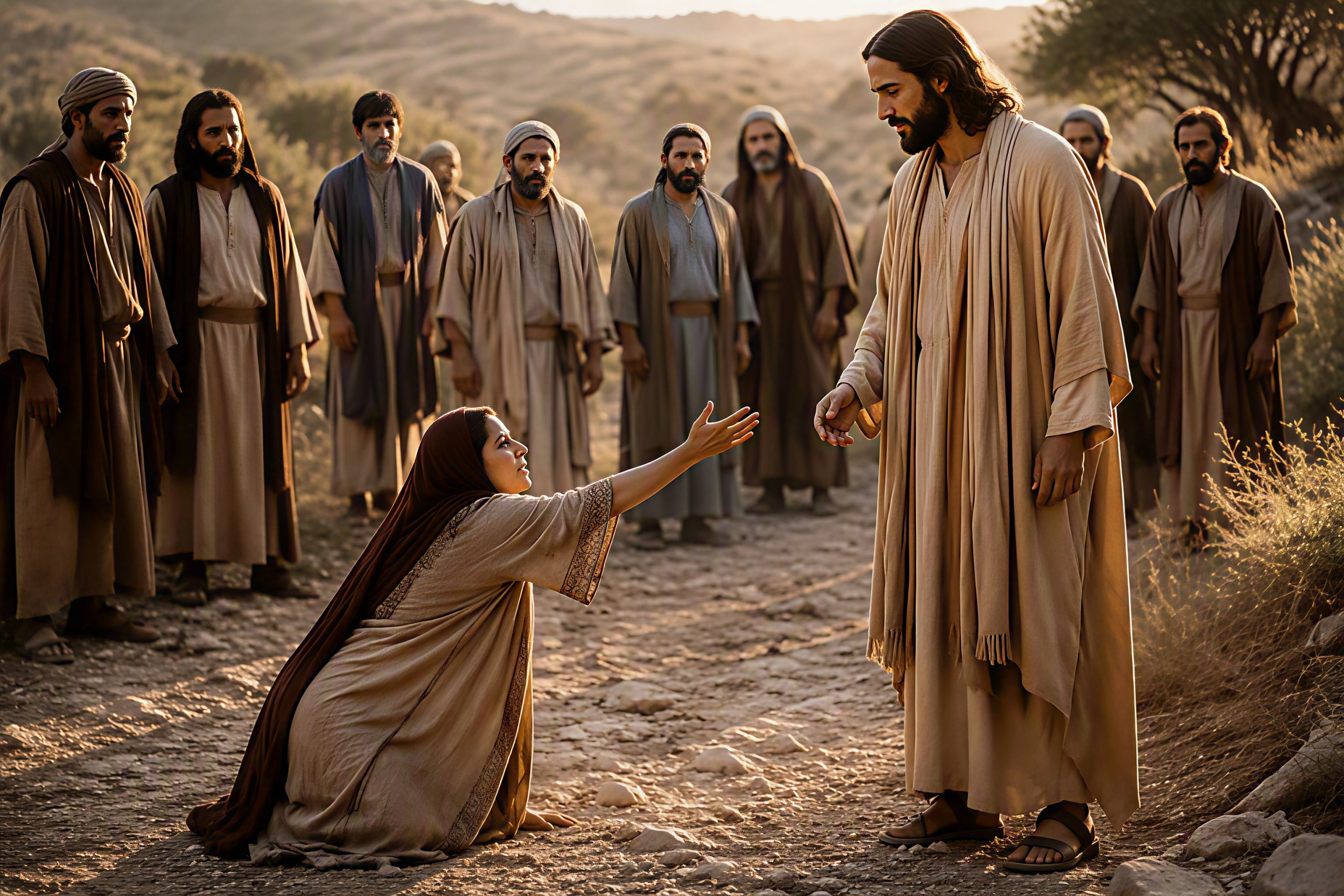
“Just then a woman who had been subject to bleeding for twelve years came up behind him and touched the edge of his cloak. She said to herself, ‘If only I can touch his cloak, I shall be cured.’
Jesus turned around and saw her, and said, ‘Courage, daughter! Your faith has saved you.’ And from that hour the woman was cured.”
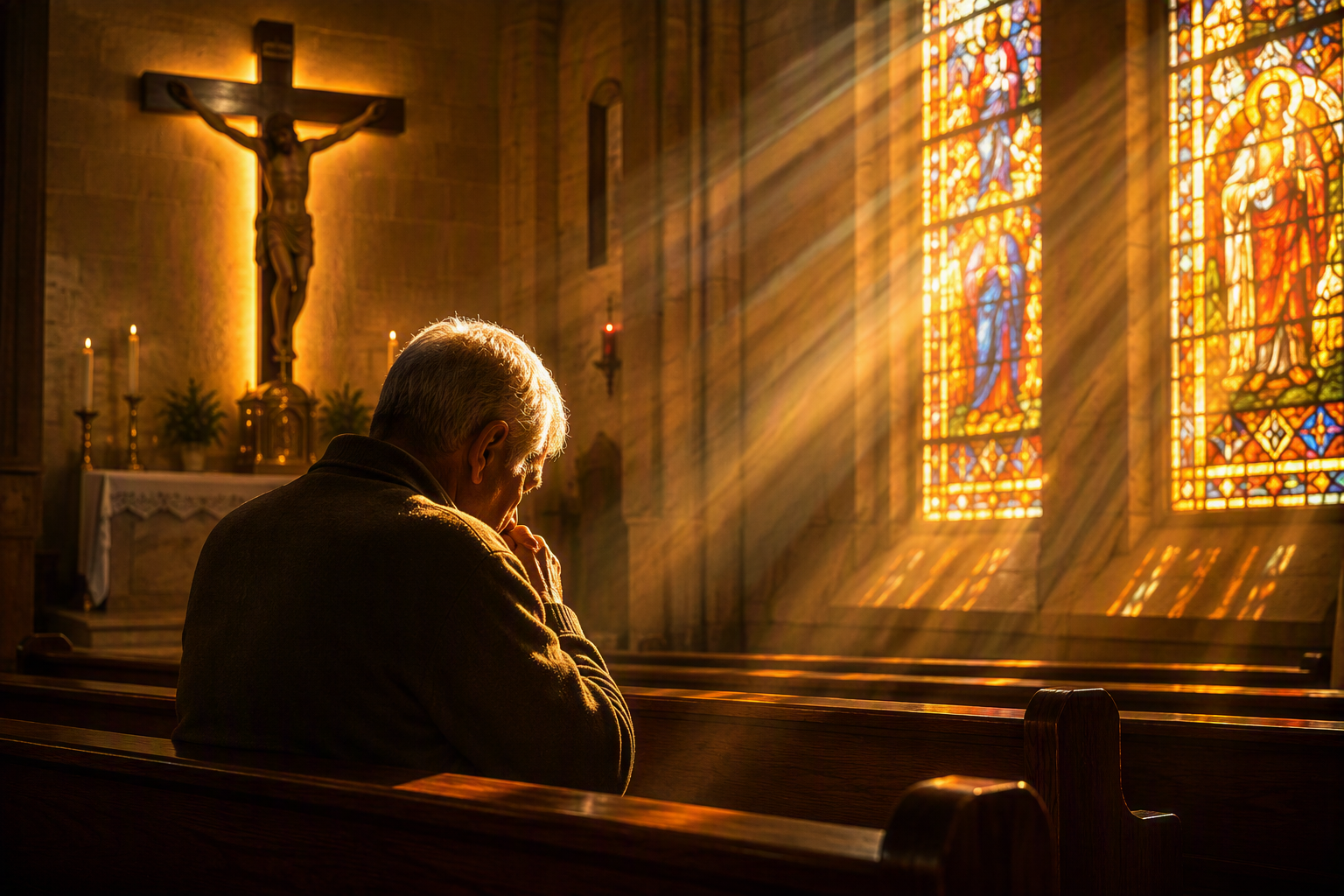
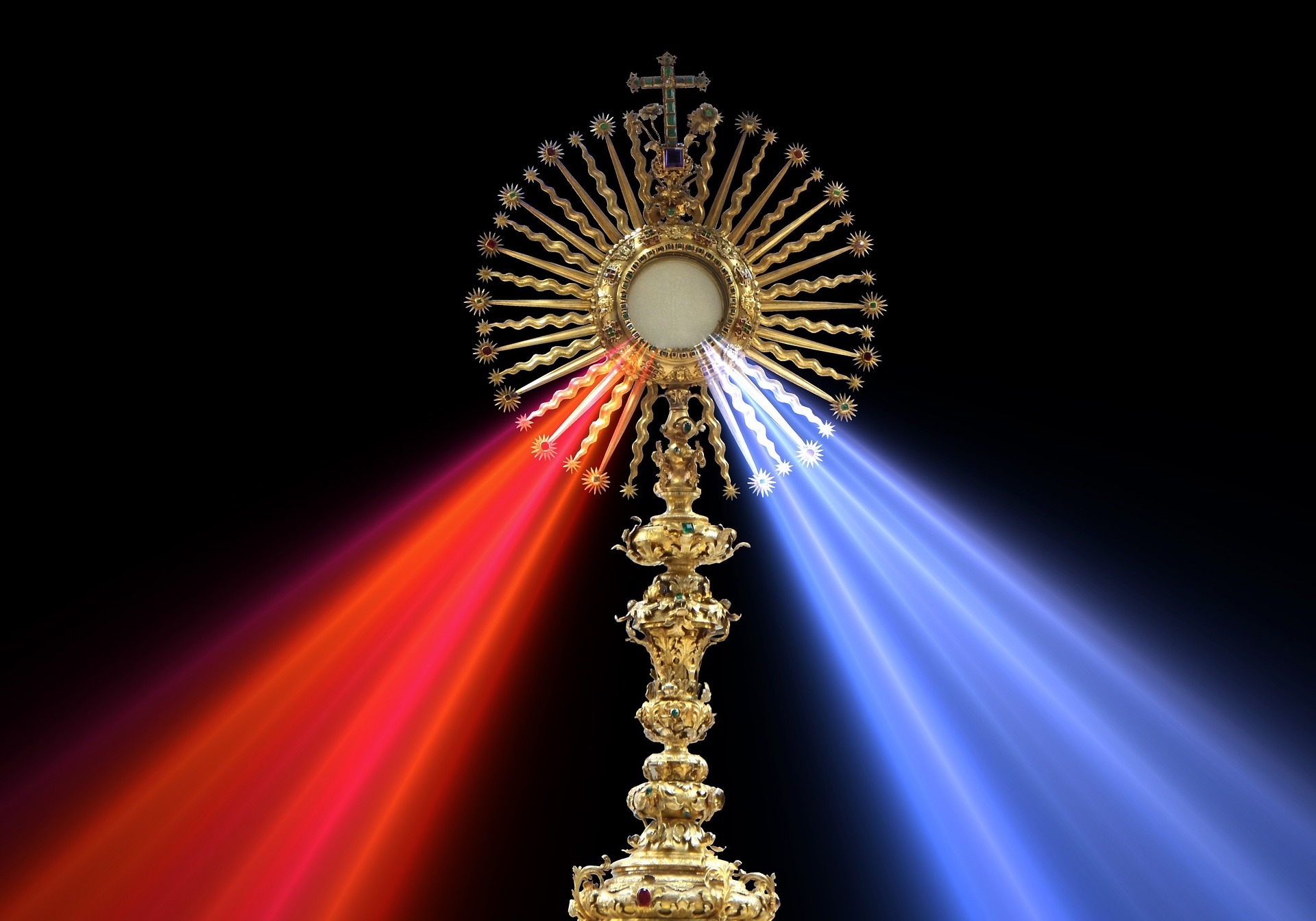
Tonight, as we sit here with Jesus in the Blessed Sacrament, I want you to picture this scene with me.
A crowd is pressing in around Jesus. People are shouting, pushing, kicking up dust. Everyone wants something from him.
Somewhere in that crowd is one woman.
She’s been sick for twelve years, and nobody can fix it. She’s tired, discouraged, probably embarrassed. Maybe she’s close to giving up.
But she still has faith.
She says to herself, “If only I can touch his cloak, I shall be cured.”
Think about that.
She doesn’t say, “If only Jesus notices me,” or “If only I’m good enough.”
She just believes that getting close to Jesus will change everything.
She’s right.
I think a lot of us are a bit like her.
Maybe we’re not sick, but we’re carrying something heavy.
Maybe it’s school. Maybe it’s anxiety, or pressure about the future. Maybe you’re wondering if God even sees you or hears you.
On the outside, everything looks fine. Inside, it’s a different story.
Here’s the good news: Jesus already knows.
He knows your fears, your hopes, and the questions you’re afraid to ask.
Yet, He loves you completely.
One of the hardest things for any of us to do at times is figuring out where to find Jesus.
You’ve heard he’s everywhere, and that’s true.
You find him in scripture, in prayer, in creation, in your family, in the poor, and in the people who love you. God is truly never far away.
But tonight, the Church reminds us of something even more amazing.
Jesus isn’t just everywhere. He’s here. Right here.
Not as a symbol. Not as a metaphor.
The same Jesus that woman touched on a dusty road is truly present in the Eucharist in front of us in the monstrance.
The same heart that looked at her with compassion. The same voice that said, “Courage, daughter.” He’s right here with us tonight.
Here’s the thing: this Gospel isn’t really about touching a cloak. It’s about faith.
The cloak wasn’t magic. The healing came from Jesus, and her faith is what connected her to him.
That’s what prayer is, too. It’s not magic. It’s a relationship: opening your heart and trusting Jesus enough to let him in.
You might think holiness means having all the answers. It doesn’t.
You might think you have to be perfect before you come to Jesus. You don’t.
That woman came to Jesus because she needed him.
That’s what faith looks like: bringing your need, and your whole self, to Jesus.
As you get ready for Confirmation, remember what it’s really about.
It’s not graduating from religious ed.
It’s an invitation to live as a disciple of Jesus, to let the Holy Spirit work in your life, and to become a saint.
Nobody becomes a saint by accident. Saints become saints by staying close to Jesus.
So the question for all of us is: how do we stay close to him?
The Church gives us a clear answer. Most of all, we find him in the Eucharist.
Every saint knew this.
Saint Carlo Acutis used to say, “In front of the sun, you get a tan. In front of the Eucharist, you become a saint.”
When life got hard, they went to Jesus. When they failed, they went to Jesus. Again and again, they came back to the Eucharist.
Because they knew they were spending time with a real, living person: Jesus Christ.
Imagine if, every time something got hard, your first thought was, “I need some time with Jesus.”
A big game, a test, a hard conversation, a family problem, a big decision: what if you brought it to him first?
What if Jesus became your first conversation, not your last resort?
That woman believed even the smallest touch could change her life.
Tonight, you have something even greater. You’re not reaching for the edge of his cloak. You’re sitting right in front of him in the Eucharist.
The same Lord who looked at her is looking at you. He sees your struggles, and he knows exactly what needs healing in your life.
Maybe it’s fear. Maybe it’s doubt. Maybe it’s a wound you’ve never told anyone about. Or maybe you just want to know him better.
Whatever it is, bring it to him.
In a few minutes, we’ll spend some time in silence. I know silence can feel awkward.
We’re used to noise and activity: music, videos, notifications, messages, always something going on.
But God often speaks most clearly in the quiet. Not always with words. Sometimes it’s a sense of peace, or just knowing you’re not alone.
Don’t worry if nothing dramatic happens tonight.
That woman didn’t start with feelings. She started with faith. Faith comes first; the feelings may come later.
Either way, Jesus is here, and he’s working.
So I invite you to pray something really simple, like:
“Jesus, help me know you.”
Or:
“Jesus, I trust you.”
Or even:
“Jesus, I don’t know how to pray, but I’m here.”
Prayers that simple can change a life, because Jesus is listening.
He sees you. He knows you. He loves you.
Just like he said to that woman, I believe he’s saying to each of you tonight:
“Courage.”
Don’t be afraid.
Bring him your heart, your questions, and your struggles. Stay close to him.
You’ll find Jesus in a lot of places throughout your life. But you’ll always find him here in a special way: truly present in the Eucharist, waiting for you with love.
Amen.