Homily for the Third Sunday of Easter (Cycle A)

By Deacon Richard Hay

“Joy walking right alongside of us…”

Many of you know this story but I don’t think I have ever shared it in a homily. I felt called to do so this week as I prepared because it is an example of joy that is present even when we do not see it ourselves in that moment, which is the theme of this homily.

Back in May of 2022, about a month before my ordination to the diaconate, my wife Margo was diagnosed with terminal cancer, and she died just a few weeks after I was ordained.

In the days and months after her death, as I reflected on those seven weeks and the three years before that while I was in final formation for the diaconate, I was able to see how we were prepared for that chapter of our lives.

We grew closer in the joy of the Lord by praying the Liturgy of the Hours together. We had more heartfelt discussions about the scriptures we heard at mass. We also had wonderfully deep conversations while I was being taught homiletics. Practicing them with Margo, she would listen and give me feedback – and those of you who knew Margo – sometimes that was very frank feedback but always given with love – which I cherished.

Each and every one of those moments and many others are sources of great joy and mercy even though it was not always obvious in the moment. It was only when I took time to reflect that I was able to discern exactly what God was doing for us in those days – preparing us for what would be an unexpected moment in our lives – but also giving us the grace and joy to experience it with Him alongside of us. When I hear the Emmaus story in the Gospel, I recognize the same pattern – the slow dawning of joy that was present all along.

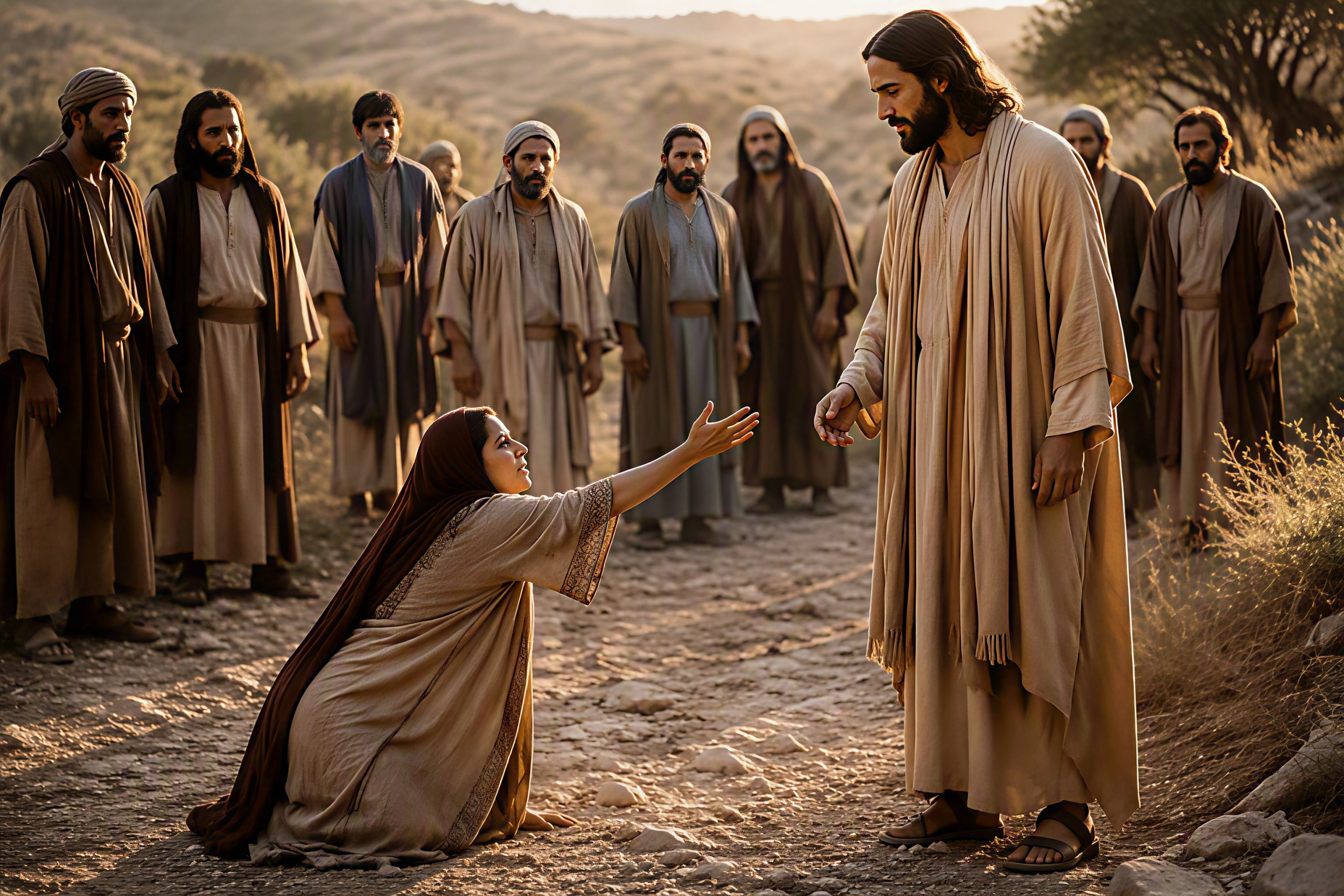
The two disciples on the road to Emmaus are experiencing something similar. By walking away from Jerusalem, they are not abandoning their faith. They are not rejecting Jesus. They are doing what many of us do when life becomes confusing or painful: they are trying to make sense of it. They are righteous men — faithful, committed, but deeply wounded. Their hopes had been high and their love for Jesus real. And now they are walking away from Jerusalem with heavy hearts.

They had hoped Jesus was the one to redeem Israel. They had hoped the story would unfold differently. They had hoped that their faithfulness would be met with clarity rather than chaos. And so, they walk, and they talk, and they sift through their memories, trying to understand how everything they believed could have unraveled so quickly. Joy, for them, is not even a distant dream. It feels absent.

And then, in one of the many powerful moments in Scripture, Jesus draws near. He does not arrive with fanfare. He does not interrupt their grief with a miracle. He simply walks up beside them, matching His pace to theirs, entering their conversation and listening.

He does not wait for them to pray the right prayer, reach the right conclusion or recognize Him. He meets them exactly where they are — in their confusion, in their disappointment, in their grief. Joy is already present to them, but it is hidden from their view – just like the Lord is.

Isn’t that how the risen Christ so often moves in our lives? Quietly. Patiently. Without demanding attention. We imagine joy as something we must earn, something that comes only after we have achieved spiritual righteousness or moral perfection. But the Gospel reveals something far more merciful: Joy is not the prize at the end of righteousness. Joy is the gift Christ gives us along the way. Even when we don’t see Him. Even when our hearts feel heavy. Even when we are walking in the wrong direction.

He lets them speak their truth — their disappointment, their confusion, their grief. He honors their experience. He receives their sorrow without correcting them or rushing them toward resolution. Only when they are done does He open the Scriptures, gently reweaving the story they thought they understood, helping them see that God had been at work even in the moments that felt most like failure.

Then something begins to happen slowly and quietly. Their hearts begin to burn with a renewed sense of faith. With the faint warmth of hope returning to a place that had grown cold. This is the work of joy.

Trying to be righteous is not about having everything figured out. It is about staying on the road, staying in conversation with God, staying open to the possibility that Christ is nearer than we think.

When they reach the village, Jesus acts as though He is going farther but they say “Stay with us.” and He does.

Then, in the breaking of the bread — in that simple, familiar, sacramental gesture — their eyes are opened. The truth shines through and joy becomes visible. What had been true all along is suddenly revealed: Christ was with them the whole time. Not just at the table. Not just in the sacrament. But on the road. In the confusion. In the questions. In the heartbreak. Joy had been walking beside them long before they recognized it.

What do they do once they recognize Him? They rise. They run. They return to Jerusalem — the very place they had been fleeing. Joy does not make them passive, it sends them into action. When you finally realize that Christ has been with you all along, you want to share that truth. You want to bring that joy to others. You want to witness to the presence of the risen Lord.

Many of us are walking our own Emmaus roads right now. Some of us are carrying grief. Some of us are confused. Some of us are tired. Some of us are doing everything we can just to put one foot in front of the other. And maybe joy feels far away. However, let me offer this as a word of hope:  If you are walking faithfully — even slowly, even imperfectly — Christ is already beside you – even if you don’t yet recognize Him.

Righteousness leads to joy not because we earn it, but because Jesus never leaves us. He listens to us. He teaches us. He walks with us. And in the breaking of the bread — in this Eucharistic celebration and every mass we participate in — He reveals Himself again and again.

So perhaps this week, we can all take a moment to look back over our days with a quiet, prayerful curiosity and ask ourselves: Where might Christ have been walking with me, unnoticed? Where might joy have been quietly keeping pace with me? Where might my heart have been burning without my realizing why?

The Emmaus story is not something that just occurred once – it keeps happening. Christ keeps drawing near. Joy keeps walking beside us. And sooner or later, our eyes are opened.

Homily for Holy Thursday – April 2026

By Deacon Richard Hay

“Do You Realize What I Have Done for You?”

Tonight, the Church invites us to slow down. To resist the temptation to rush past what is familiar. To stay with a mystery that is so rich that it can only be approached patiently.

Holy Thursday is not a night for efficiency. It is a night for lingering. Lingering with the scriptures, lingering with the gestures, lingering with the love of Christ as it reveals itself before us.

Tonight is not only about what Jesus did then, in an upper room, on the night before he died. Tonight is about what Christ is still doing — here, now, whenever he gathers his people together.

The liturgy this evening places before us three great gifts — three moments that belong together: the Passover, the Eucharist including the institution of the priesthood, and the washing of feet.

They are not three lessons placed side by side. They are one single movement of God’s heart — a movement that shows us what divine love looks like when it takes flesh.

– A love that saves.

– A love that feeds.

– A love that teaches us how to live.

The story begins, as so many stories of salvation do, in a place of fear and powerlessness.

In Egypt, the people of Israel are enslaved. They are worn down by years of oppression, unable to free themselves, with no clear path forward. God intervenes — but not in the way we might expect.

– There is no army.

– No dramatic uprising.

– No display of overwhelming force.

Instead, God asks for trust.   Trust expressed through a lamb. Through blood quietly placed on wooden doorposts. Through a meal eaten in the dark, in hope. That blood becomes a sign — not of threat, not of fear, but of belonging.

It marks the homes of those who trust the Lord’s promise. Where that blood is seen, death passes over. Life is spared. Hope is born. Then there is a detail that matters more than we sometimes realize.

The people are told to eat the meal ready to move — sandals on their feet, staff in hand. Salvation, in the Scriptures, is never an endpoint. It is never a moment where everything simply stops. Salvation is always a beginning — the opening of a road, the first step into a future not yet fully understood.

Then, our psalm tonight gives voice to the human heart – a heart that realizes it has been saved. “How shall I make a return to the Lord for all the good he has done for me?”

It is a deeply honest question — the question we ask when grace has caught us off guard, when mercy has been freely given, when we know we have received far more than we deserve.

The answer is beautifully simple: “The cup of salvation I will take up.”

– Not achievement.

– Not self‑justification.

– Not proving anything.

– Just gratitude.

What was once a cup of rescue has become a cup of communion. The God who saves does not remain distant. He draws near.

Saint Paul then brings us into the Upper Room, into a moment heavy with tension and uncertainty. Jesus knows what is coming. He knows betrayal is near. He knows suffering and death lie ahead.

Yet, on that very night — the night when most of us would be tempted to pull back, to protect ourselves, to conserve what little strength we have left — Jesus gives himself more fully. He says words that will change everything.

– He takes bread – “This is my body, given for you.”

– He takes a cup – “This cup is the new covenant in my blood.”

With these words, Jesus institutes both the Eucharist and the Priesthood. He gathers up the entire history of the Passover and brings it to fulfillment by becoming the lamb. His blood becomes the sign of a new deliverance — a new covenant. Freedom from slavery to sin, from despair, from death itself.

When he says, “Do this in remembrance of me,” he is not asking us to merely think about him.  In the Scriptures, remembrance makes the saving act

present and effective now. Every time the Church gathers around the altar, time bends. Heaven touches earth. Christ gives himself again — not symbolically, not partially, but truly and completely. The Lamb is no longer only remembered – the Lamb is received.

Then in John’s Gospel – we are gently but unmistakably reminded of something essential. The Eucharist is never meant to stop at the altar. John does not record the words spoken over the bread and wine. Instead, he shows us what those words look like when they take flesh.

– Jesus rises from the table.

– He lays aside his outer garment.

– He kneels.

The one they call Teacher and Lord takes the posture of a servant. He washes their feet — dusty, tired, imperfect feet. This is not a symbolic action. It is intimate, personal and for the disciples, and likely many of us when it happens here – uncomfortable.

Peter speaks for all of us in that moment: “Master, you will never wash my feet.” However, Jesus answers with words that still confront us tonight: “Unless I wash you, you have no inheritance with me.”

– Before we can follow Christ, we must allow ourselves to be served by him.

– Before we can love as he loves, we must accept that we are loved not because we are worthy, but because he chooses us.

Then he gives the command that defines the Christian life: “As I have done for you, you should also do.”

This is the unity of Holy Thursday.

– The Passover teaches us that we are saved by sacrificial love.

– The Eucharist teaches us that we are nourished by that love.

– The washing of feet teaches us that we are sent to live that love in the world.

The altar and the basin belong together. What we receive here must shape how we live beyond these walls. To say “Amen” tonight is not only an act of belief. It is an act of surrender.

– A surrender to a love that kneels.

– A love that serves quietly.

– A love that asks us to see Christ in one another.

So tonight, Jesus asks each of us — not with judgment, but with tenderness:

“Do you realize what I have done for you?”

– Do we realize that we are marked not by fear, but by his saving grace?

– Do we realize that we are not fed with ordinary bread, but with divine life?   

– Do we realize that we are not called to greatness as the world defines it, but to faithfulness expressed in humble love?

Holy Thursday does not end when this liturgy ends. It continues wherever love stoops low, where mercy is practiced patiently, where Christ is recognized in the ordinary and the overlooked.

May what we receive tonight take root within us, shape our lives, and bear fruit.

Homily for the Fourth Sunday of Lent (Cycle A)

By Deacon Richard Hay

“Learning to see as God sees…”

This Sunday the Catholic Church offers a quiet but beautiful surprise. During Mass, priests and deacons are wearing rose-colored vestments, the rarest liturgical color used in the entire Church year. Rose appears only twice—on Gaudete Sunday in Advent and Laetare Sunday in Lent—and it signals a moment of joy in the middle of seasons that are normally marked by preparation and penance. The color is a gentle reminder that even while we wait, repent, and reflect, the light of Christ is coming, and the hope of Easter is already breaking through.

This weekend we also continue the scrutiny’s for the catechumens and candidates who are preparing to receive the sacraments at Easter.

Like Fr. Marek last week, I chose to proclaim the longer version of today’s gospel for this weekend because St. John once again weaves such a beautiful story about the man born blind and how his faith grows after encountering the Lord. This directly translates to the sacraments and our own lives of faith.

Today’s readings are about learning to see as God sees.

In our first reading, when Samuel arrives at Jesse’s house to anoint the next king, he is ready to be impressed. He sees the oldest son — tall, strong, the kind of man who looks like he belongs in charge. Samuel thinks, “This must be the one.”

But God interrupts Samuel’s assumptions with a powerful response – “Not as man sees does God see, the Lord looks into the heart.”

David, the youngest, the overlooked one, the one who was still out in the fields caring for the sheep, he is the one God chooses.

This is God’s way. God sees potential where we see limitations. God sees dignity where we see flaws. God sees belovedness where we see brokenness. And if that’s how God sees others… it’s how God sees each and every one of us.

Then in our Psalm, one that we are all familiar with, we are reminded of the tenderness of God’s love and accompaniment – “The Lord is my shepherd; there is nothing I shall want.”

Did you know that shepherds in ancient times used oil on the faces of their sheep to keep insects away and to heal small wounds. That image is not far from what we receive in the sacraments — anointing with oil to strengthen, to heal, to protect.

And notice something – the psalm never says we will avoid the dark valley. It simply says we won’t walk it alone. God’s presence doesn’t always remove the difficulty, but it transforms the journey.

In St. Paul’s letter to the Ephesians, he tells us – “You were once darkness, but now you are light in the Lord.”

St. Paul doesn’t say we were *in* darkness — he says we *were* darkness. And now, through baptism, we *are* light. That is not a small shift – that is a complete transformation of identity.

Baptism wipes away original sin and gives us our first sacramental encounter with the Holy Spirit. In Baptism we are anointed with the Oil of Salvation and Sacred Chrism. It changes the way God sees us — and the way we are called to see ourselves.

However, the reality is that stepping into the light can be uncomfortable. Light reveals things. It shows us what needs healing, forgiveness, and what needs to be surrendered. It shows us parts of ourselves that we try to hide and ignore. Yet – it also reveals our goodness, our belovedness, our calling. Lent is the season when God gently says, “Let me shine my light there. Let me help you see.”

St. John gives us another full chapter in the Gospel this week — just like last week with the Woman at the Well. And again, the theme is relationship, recognition, and revelation.

There are two kinds of blindness in this Gospel. There is the physical blindness of the man who cannot see. And there is the spiritual blindness of those who refuse to see — the Pharisees, the neighbors, even the disciples at first.

The disciples begin with a question – “Whose fault is this?” they ask the Lord. They want to assign blame, but Jesus refuses that approach. He instead says the man’s blindness is not punishment — but it is an opportunity where “God’s works can be revealed.”

Then Jesus kneels down, makes clay, and gently places it on the man’s eyes. There is something so very tender and intimate at that moment — God’s hands touching the very place of pain for this man. Just like God touches and heals those parts of our lives through the sacraments, that cause us pain.

Then Jesus sends him to wash in the Pool of Siloam. The man returns able to see, but the deeper miracle is what happens next.

His physical sight becomes spiritual sight. He begins by calling Jesus “the man.” Then “a prophet.” Then, he stands up to the Pharisees with courage he didn’t know he had. And finally, when Jesus finds him again, he says the words that are at the heart of discipleship – “I do believe, Lord.”

Meanwhile, the Pharisees — who have perfect physical eyesight — become more and more spiritually blind.

These readings are chosen every year for the scrutiny’s because they speak directly to the journey we are all on – the catechumens and candidates preparing for the sacraments and our own sacramental journey’s. The scrutiny’s uncover what is dark in each of us and invites the Light of Christ into our souls.

The blind man’s story is a baptism story. He begins in darkness. He encounters Christ. He is anointed. He washes in water. He receives sight. He grows in faith and then proclaims Jesus as Lord.

Are we the same person after our baptism? We shouldn’t be because we are no longer spiritually blind; we are no longer defined by sin; and we are no longer wandering without a Shepherd.

We truly begin to exist when we enter relationship with God. The blind man, in asking Jesus for sight, is really asking for relationship. And over the course of the Gospel, we watch that relationship deepen before our eyes.

This is what the sacraments do. They open our eyes, hearts, and lives to God’s grace.

All the readings today point to one truth – God wants to help us see.

  • To see ourselves with mercy. 
  • To see others with compassion. 
  • To see God’s presence in unexpected places. 
  • To see the world not through fear or cynicism, but through the eyes of Christ – the eyes of love.

As we continue this liturgy, I invite us to consider – where do we need God’s light right now? Is it in a relationship, a decision, how we see ourselves or maybe how we see someone who has hurt us?

Let that be our prayer this week as we continue our Lenten journey to the Easter Sacraments.

Homily for the First Sunday of Lent (Cycle A)

By Deacon Richard Hay

“No shortcuts…”

Well, it has been around four days since this season of Lent has begun – how is everyone doing so far??

Don’t worry. It’s early and I suspect many of us are still getting things going and figuring out what it is we will work on – whether that means giving up some habit or maybe introducing something new in our spiritual and prayer life.

Here at the parish, we have some ready-made options for you like Stations of the Cross each Friday evening at 7 PM here in the main church, daily mass that can be added to your schedule during the week, our upcoming parish mission in March and our parish reconciliation service. Details are in your bulletins, so be sure to mark your calendars to take advantage of those opportunities.

You have often heard me talk about how our daily scripture readings lead us into the readings we hear at mass on Sunday. Well, I am here to share that once again in these four days since we received our ashes on Wednesday that continues.

The gospel on Ash Wednesday cautioned us against performing righteous deeds just so others could see them. Whether it is prayer, fasting or almsgiving, Jesus cautions that when that happens, we will have already received our reward – the adoration and recognition of others.

On Thursday, Jesus reminded us that He must suffer and be rejected which would result in his death but would be followed by his being raised up.  He also reminded us that we must deny ourselves and take up our cross to follow him.

Then, on Friday, Jesus reminded us that the day is coming when the bridegroom – Jesus himself – will be taken away from us.

In Saturday’s gospel, Jesus calls Matthew to be his disciple and that evening Matthew hosts a dinner for Jesus with tax collectors and sinners as guests. When challenged, Jesus tells them that the healthy do not need a physician but the sick do. Jesus did not come to call the righteous to repentance but sinners.

Each one of these gospels over these last four days are reminders to us of why we have this season of Lent in the church – to help draw us closer to Jesus through prayer, fasting, and almsgiving. They are also a reminder that Jesus is there for all of us no matter what – even though we are sinners.

Every year on this First Sunday of Lent, the church brings us into the desert with Jesus. Not because God wants us to feel bad about ourselves, but because He wants us to discover the joy that comes from being made clean and ready for all the good things he has in store for us.

Lent is a time for discipline, for confession, for honesty so that we can reach that refreshed state in our souls.

In today’s gospel, Jesus faces three temptations – each one is a shortcut. A shortcut away from the Father’s will. A shortcut away from the mission. A shortcut away from love. If we are honest, most of our temptations work the same way.

During the first temptation, Satan tells Jesus to turn stones into bread. In other words, to use His power to make life easier. To avoid discomfort – to take the shortcut. However, Jesus knew it was not the Father’s will to use His divine powers to spare himself the suffering of His human condition. Jesus refuses to take the easy way out.

We face this temptation too – the temptation to comfort, to instant gratification of whatever numbs or distracts us.

Lent gives us a response to this – fasting. Fasting trains our desires. It teaches us that we do not live by bread alone, and that our bodies don’t get the final say.

For the second temptation, Satan takes Jesus to the top of the temple in Jerusalem – not a random cliff or other high place – but the very spot where prayers rise up to God from the Jews praying in the temple. He challenges Jesus to prove himself and jump off the temple parapet so that the angels of God can catch Him.

However, that would have resulted in fame and celebrity for the sign, but Jesus’s mission was about humility and not sensation.

For us, this temptation is the desire to be noticed, to be admired, to be validated. It’s the temptation of social media – “Look at me. Approve of me. Tell me I matter.”

Jesus refuses to test God. He refuses to make his identity something that he must perform for.

Our Lenten discipline here is prayer. Not the kind that tries to impress God, but the kind that admits we need Him. Prayer acknowledges our need for God and submits to His will admitting that we can’t do any of this without Him.

The final temptation Jesus faces in today’s gospel is lust of the eyes. Satan, who has failed at his previous efforts to tempt Christ, shows Jesus every kingdom and power across the entire earth and gives a simple requirement – “Bow before me and it is all yours.”

Think about it, so much to gain through a small act of worship and wouldn’t Jesus be able to do great things for everyone in these earthly kingdoms?

The difference – this was not the Father’s will. Jesus understood that the Kingdom of God would only come through the cross – not through compromise.

For us – this is the temptation to possess, to accumulate, to control. Lent gives us a remedy for this as well – almsgiving. Almsgiving breaks the grip of greed. It frees our eyes from wanting everything we see.

Ultimately – Jesus’s victory over the devil is our victory. It helps us remain faithful when we are tested.

We don’t go into Lent to prove ourselves – we go into Lent to cling to Him who has already won. Our Lenten efforts are not effective on their own. They are only effective when we unite our small, token efforts with the work of Jesus. Without Jesus, nothing we do in Lent or at any other time of the year matters – that is the key.  

Prayer, fasting, and almsgiving don’t save us – Jesus saves us. Observing these disciplines, simply opens the door.

As I conclude – a short story.

A little girl told her mother, “For Lent, I’m giving up broccoli.” Her Mom replied and said, “But you don’t even like broccoli.” The girl grinned and said, “Exactly – this way it’s easy!”

We smile and laugh at this because we recognize ourselves. We all want a Lent that’s easy – but Jesus shows us a Lent that’s honest, courageous, and rooted in love.

Jesus didn’t take shortcuts – nor should we.

So here’s the invitation for the remainder of Lent:

  • Fast to discipline the desires of the flesh
  • Give alms to free your eyes from greed
  • Pray to humble your heart before God

Above all – unite every effort – big or small – to Jesus. When we do, Lent becomes more than a season…

  • It becomes a transformation
  • It becomes a share in His victory
  • It becomes the path that leads us to Easter joy.

Amen

Homily for the Second Sunday of Ordinary Time (Cycle A)

By Deacon Richard Hay

“Looking and living deeper in our faith…”

There was a young college student who was pondering what to do with his life, and he decided to vent his frustrations on God. He went into the campus chapel, sat in a pew, looked up to heaven and prayed, “All we have on this earth are problems and a bunch of people who will never figure out how to solve them. Even I could make a better world than this one.”

Suddenly, deep inside his heart, the student heard God’s voice with the answer: “That’s what you’re supposed to do.”

As we enter this very brief six-week period of Ordinary Time this weekend  it is important to understand what the young college student did not seem to comprehend, it is up to each of us, using our own unique talents, to make the world a better place – to more deeply share the light of Christ with others.

During this period of Ordinary Time, we hear about some of the foundational aspects of our faith such as what happened with Christ shortly after his baptism and entry into his public ministry. They all make the proclamation that Jesus is God’s servant who has come to show the glory and salvation of God to the entire world.

It begins with John the Baptist in today’s gospel pointing out Jesus, who he calls the Lamb of God, to his disciples as he passed by them – affirming that this is the one John proclaimed was coming.

We will hear Jesus preach the Beatitudes – a roadmap to help us understand what we should be doing and who we should be caring for as members of the Body of Christ.

We will be told that we are the “salt of the earth” and a light to shine out for all to see and use.

Jesus reminds us that following him means more than just obeying the ten commandments – it means doing things like not staying angry at our brothers and sisters – but to resolve those things before we even approach God at his altar and Jesus’s true presence in the Most Holy Eucharist.

Another thing we will hear is that being holy does not mean being unhappy or not enjoying life but to love in a profuse way, to love like God loves. That love is the source of all true happiness.

Then, just before we enter the season of Lent, we will hear that Christ is going to bring the entire world light and salvation, truth and holiness, freedom from darkness and freedom from sin.

We will receive a tremendous amount of foundational awareness to help us understand who Jesus is and why the Father sent him into the world.

How do we use this information, this awareness, these gifts we are given, to deepen our faith and prayer life so we can grow closer to God?

The answer is that we must go deeper – get beneath the façade – look beyond that which is on the surface. Our faith must grow so that we can better share it with others in the world.

As some of you may be aware, this past week I was blessed to be able to travel out to Tucson, Arizona to attend the Vatican Observatory’s “Astronomy for Catholics and Ministers in Education” a workshop and retreat.

It was a mix of lectures, group discussions, a couple of field trips, many one-on-one encounters, and every evening we had mass and then spent several hours observing the night sky under the dark skies of southwest Arizona using our telescopes and those brought by others.

In attendance were teachers, community educators, clergy including five priests – many scientists themselves, two deacons, and two men in formation for Holy Orders.

We are very cheated here in Northeast Florida with the quality of our night skies and how many stars we can see. At the retreat center, the skies were probably three or four levels darker than we have here and that meant the stars were numerous.

If you have ever seen images that come from an observatory here on earth, those that are in space, or even some backyard amateur telescopes, you quickly realize there is much more color, beauty and intricacy than meets the eye in the night sky above us.

Out in Arizona, under those dark skies, I realized that you can pull beauty out of the darkness. I had the opportunity to capture multiple nebulas and star formations over this past week which are not visible to the naked eye and it reminded me that we can discover there is more to be enjoyed than just what we initially look up and see – more beauty to behold if we look for it beyond the stars. It does take effort and time – and some equipment of course – but it can be done.

Our faith lives are like that – much more than meets the eye. We can come into church every weekend for mass, see the beauty of the liturgy, the beauty of our church, encounter family and friends, witness the celebration of other sacraments and hear the richness of the Word of God each Sunday.

However, doing those things, while important because showing up matters – we must be willing to go deeper – to pull the beauty out of what we initially see like I was able to do out in Arizona under the night sky.

Our faith must be more than just the surface details of what we see and encounter each week. To truly deepen our worship, we must do more. If astronomers and scientists never looked beyond the stars in the sky, we would lack in our understanding about the universe.

So what equipment, tools or actions are available to help us begin exploring our faith at an even deeper level so that we can more effectively share it with others?

First – make an effort to read scriptures daily. The daily scripture readings weave together the story of salvation history and bring greater meaning to our readings and the gospel at Sunday mass.

Next – fully and actively participate in the mass. There is a reason we come together as a community to worship. We can be lifted up by our brothers and sisters here in the church and raise our voices together as one in our worship of God. In addition, carve out some time to worship Jesus’s true presence in the Most Holy Eucharist at adoration. We grow closer to our family and friends by spending time with them – spending time with Jesus at adoration will increase the depth of our relationship with him.

Finally – work on always being in the presence of God. Pope Leo recently mentioned a book about this very subject written by Brother Lawrence whose task was to cook and clean within his community of religious brothers. He found God in all the things he had to do – even the mundane tasks of the day. We can imitate this to increase the depth of our connection and understanding of God by continually thanking him for all that we are able to do and receive, including the routine and boring parts of our day.

If we can incorporate some of these things into our faith lives, we can all go deeper – well beyond the surface – and see the beauty that is already there to be discovered if we just take the time to look for it.

Homily Aid Gallery

Images captured by Deacon Rich in Arizona during January 2026 at the Vatican Observatory Foundations “Astronomy for Catholics and Ministers in Education” (ACME) workshop and retreat.

Homily for the Fourth Sunday of Advent (Cycle A)

By Deacon Richard Hay

“Waiting with promise and trust…”

Looking back over the first three Sundays of Advent, we have heard a lot about preparing prayerfully as we wait for the arrival of Jesus at Christmas. The goal has been to not rush forward on the calendar but to use this period to prepare our hearts for His coming.

Yet – even here in our church – there has been the need to take care of some things during this final week of Advent as I am sure many of you had to do at home. Don’t worry – that is all OK.

As beautiful as it all looks – even more so when the lights are turned on – those things are still not our focus on this final Sunday of Advent. Instead – we shift our gaze on love – the love God has for us.

Did you know that during the seven days before Christmas, the church shifts to a particular set of prayers and scriptures for the daily mass to help us complete our Advent preparation.

First, we hear the genealogy of Christ in the Gospel of Matthew – all 42 generations.

We also heard the same gospel which I just proclaimed and how Joseph was told in a dream by the Angel of the Lord to take Mary into His home and not be afraid.

The next gospel tells of the angel Gabriels visit to Zechariah when he learned that his wife Elizabeth, who we know was Marys’ relative, would give birth despite her advanced years to a son to be named John. Zechariah was also made mute for his disbelief.

Next, we hear again from Luke about Gabriel’s visit to Mary for the Annunciation. Mary provides her yes to this news even though she did not fully understand it at that moment.

Next week before Christmas, we will continue to hear from this special series of gospels about Mary’s proclamation of the greatness of the Lord – her Magnificat – also known as the Canticle of Mary; then we will hear about the birth and naming of John. As he receives his ability to speak once again, Zechariah offers blessing to God in what we now know as the Canticle of Zechariah.

As you can see, scripture is beautiful and can not only help us prepare for the Nativity of the Lord in this case, but can also unite the readings as we come together each Sunday. If you do not already read the daily mass readings, it can really enrich your prayer life and the life we live in the church.

And now we find ourselves just four days away from Christmas. The final candle on our Advent wreath glows with anticipation. Outside, the world is bustling – stores are crowded, lists are long, traffic is hectic, and our calendars are full. But here, in this sacred space, we are invited once again to pause. To breathe. To listen for the gentle whisper of God’s presence among us.

Advent is a season of waiting, but it’s not a passive waiting. It’s a time of hope-filled expectation, of preparing our hearts to welcome Christ anew. And today, the scriptures speak to us of promise, of trust, and of the extraordinary ways God enters into our ordinary lives.

Our first reading from Isaiah takes us back to a moment of crisis for King Ahaz and the people of Judah. Surrounded by threats, filled with fear, Ahaz is offered a sign from God – a sign he is almost too afraid to accept. Yet God, in His faithfulness, gives the sign anyway: “The virgin shall conceive and bear a son, and shall name him Emmanuel.” Emmanuel which means God is with us. Not God above us, or God far away, but God right here, in the midst of our struggles, uncertainties and triumphs.

This prophecy is a promise for us, especially when we feel overwhelmed or anxious about the future. God’s answer to our fears is not always to remove the challenge, but to assure us of His presence within it.

Saint Paul, in his letter to the Romans, reminds us that God’s promises are not empty words. Jesus is the fulfillment of all that was foretold. Paul’s greeting extends God’s love to all people, no matter their background or burdens. In a world that often divides and excludes, Paul’s message is clear: God’s love is for everyone. No one is left out of the story of salvation.

Then we come to Joseph in the gospel. A figure who often stands quietly in the background of the Christmas story. Joseph’s world is turned upside down by news he cannot yet understand. He faces a choice: to walk away, or to trust in God’s mysterious plan. In a dream, the angel tells him, “Do not be afraid.” Joseph listens. He chooses trust over doubt, love over fear. He welcomes Mary and the child Jesus, embracing a future he cannot fully see.

How often do we find ourselves in Joseph’s shoes? Life brings unexpected turns – a diagnosis, a loss, a change we didn’t ask for. Like Joseph, we are invited to listen for God’s voice, to trust that even when we don’t have all the answers, God is at work.

When God enters our lives – they are no longer average and comfortable. Joseph and Mary remind us of this in the way God is incorporated into their lives and His plan of salvation. We then are invited – expected – to also be part of that – to trust his promise.

We step into God’s plan of salvation when we come to the Eucharist at Mass and receive the Body, Blood, Soul, and Divinity of Jesus in the Most Blessed Sacrament. Nourished with this gift that came at such a high cost, we must be ready to trust and let our lives go in a new direction.

We do this because He lives in us which means being Christian is not the “status quo” – and while we might not feel worthy of our role in His church, to be Christian and a member of the Body of Christ – we must do so boldly anyway.

In fact, the Psalm we heard today affirms our worthiness of this role.
When we hear that “only those with clean hands and pure hearts stand in God’s holy place” – it might seem that we who are flawed human beings are not included. However, the psalm also states that we can climb that holy mountain as long as we are among those “who desires not what is vain”.

Perhaps some of us are facing challenges this Advent – a family struggle, a loss, a worry about the future. The message of God is that He is with you, and you are not alone. Joseph’s example encourages us to respond with faith, to say “yes” to God’s invitation, even when it asks us to step out in courage in the face of the unknown.

These readings remind us that God’s presence is not reserved for perfect moments or perfect people. Emmanuel – God is with us – comes into the messiness of our lives – the uncertainties, the disappointments, the joys and sorrows. God is with us in the hospital room, at the kitchen table, in the quiet moments of worry or wonder. Like Joseph, we are invited to trust that God is working, even when we cannot see the whole picture.

The love we celebrate at Christmas is not just a feeling – it is a gift, given to be shared. Let us open our hearts to receive Christ anew in these final days of Advent. Then we can carry His love into our families, our workplaces, and our community as we prepare our hearts for the coming of Christ.

Homily for the Feast of the Dedication of the Lateran Basilica in Rome (November 2025)

By Deacon Richard Hay

“Prepare purposefully…”

Did you notice how quickly things shifted after Halloween? The moment that Friday ended, holiday commercials took over, and stores jumped straight into Christmas mode. It’s like there’s no pause—no chance to catch our breath before Thanksgiving. Everything just rushes ahead to Christmas.

And don’t get me started on Black Friday – what used to be a single day is now multiple days and weeks in length.

Now, don’t get me wrong—Christmas is a time of joy. It’s when we celebrate the birth of Jesus, our Savior, and that’s something we should never lose sight of. But while the world races from one holiday to the next, the church invites us to slow down, to move through the seasons with intention.

In a few weeks we will begin the Season of Advent, which will lead us to Christmas but in a much more reflective preparation compared to the rush of the secular world.

Just like the rush of holiday related advertising throws us forward on the calendar whether we want to or not, if we rush through these final days and weeks of the church year, we will miss the beauty of what the church has giving us, which helps us to understand that we must prepare for the end times in a measured and thoughtful way.

Although the month of November is not a formal season of the church year like Advent or Lent, it is a time where we have the opportunity to prepare our hearts and souls for the coming of the Lord and our encounter with him when our life in this world ends – when it is time for us to stand in front of the throne of judgement and give an account of our lives.

One way November helps us prepare for that is focusing our prayers on our family and friends who have passed from this life to the next. We pray very particularly for their souls and for the souls in purgatory. In praying for them we acknowledge that one day we will experience that change in our lives as well.

Through Sacred Scripture, over the course of this past week in the daily readings, a beautiful tapestry has been weaved leading up to this weekend’s liturgy. We have heard in these readings about how we should prepare for the end of our lives on this earth and being ready for that encounter with Christ.

On Monday, we were reminded that if we perform the corporal works of mercy we will be blessed because we did it for them even though they had no means to repay us – that we will be repaid at the resurrection of the righteous. If we act without fanfare, celebration or expectation of a return, then the Lord knows all that we do and will reward us.

On Tuesday we heard the parable of the man who was having a great dinner and those who were invited made excuses not to attend. He sent his servants out to invite the poor, crippled, blind, and lame instead and proclaimed that those who were invited before would not taste the dinner prepared for them because they did not accept the invitation. Don’t miss the opportunities to grow closer to the Lord.

On Wednesday Jesus said that anyone who comes to him without hating his father, mother, wife, children, brothers and sisters, and even his own life – cannot be his disciple. We heard that we must carry our own cross and renounce all our possessions to be his disciples. In other words, we must be willing to let go of our attachments in this world, such as relationships as we know them and our possessions, to be ready for the next life with God.

On Thursday we were reminded that we are the Lord’s whether we live or die and that each of us must eventually give an account of ourselves to God. We were also reminded that there will be rejoicing in heaven among the angels of God when the one who was lost repents and returns to the Lord. There is always hope in the Lord if we turn towards Him.

Then on Friday, we heard again the parable of the steward who squandered his master’s property. He was removed from his position but was praised for acting prudently in dealing with his master’s debtors to save himself in this life. It is a reminder that what we do in this world, must be done for the love of God and our neighbors – not for selfish reasons as that is contrary to what God asks of us in this life.

All of this leads us to this weekend’s Feast of the Dedication of the Lateran Basilica in Rome. A physical building that is the seat of the Bishop of Rome – our Holy Father Pope Leo XIV. Initially it might seem like an odd feast because it is for the dedication of a building. It is celebrated as a feast on our church calendar because it reminds us that the beauty of this world which we see in our churches and other places such as shrines and in nature, are a gift from God.

It is also a reminder that our bodies are temples of the Lord – that we are the church of God – built in His image. As St. Paul writes in our second reading, “Do you not know that you are the temple of God, and that the Spirit of God dwells in you? If anyone destroys God’s temple, God will destroy that person; for the temple of God, which you are, is holy.”

Keeping ourselves holy requires continuous effort just like physical buildings such as the Lateran Basilica in Rome and our church here in Fleming Island, require maintenance to remain sturdy, sound and beautiful. The church provides us with the means to maintain our own bodies and souls so they can remain sturdy, sound, and beautiful. Through Sacred Scripture, that weaves together a message to help us in this life, God gives us His inspired words because he loves us and desires us to be holy. The Sacraments given to us through Jesus, allow us to receive God’s graces to sustain us when this life is challenging and difficult. Then Sacred Tradition, given to us by the church herself, enriches our lives of faith these days with belief and understanding from across the more than 2,000 years of the church’s existence.

If we can make an effort to not succumb to the frantic pace of life in the secular world, to take our time in the seasons of the church to grow and deepen our love of God and his people, then we can be blessed in this life and be ready for the next when we finally get to encounter the God of all Creation, the God who makes us all that we are and gives us all that we need. Then we will be ready to hear him say to us, “Well done, good and faithful servant.”

Homily for Solemnity of All Saints – November 2025

By Deacon Richard Hay

“Holy Men and Women of God, pray for us…”

“I believe in the Holy Spirit, the holy Catholic Church, the communion of saints, the forgiveness of sins, the resurrection of the body, and life everlasting.”

Those words are from the final part of the Apostle’s Creed – a profession of faith in the early church. From this statement of faith, the Nicene Creed was developed to more fully state our believes as Catholics. This is the creed we profess together at the Sunday liturgy and on Solemnity’s like All Saints today.

I mention these words of the Apostles Creed because it states our belief in the “communion of saints” since the earliest days of the church. This theological concept refers to the spiritual unity of all members of our faith, those who have gone before us in death, those in purgatory, and those of us who are still living in this life, because we are all united together in Christ.

The perception of many outside of the Catholic church is that we “worship” the saints. However, that is not the case. Instead, we “venerate” the saints because, as the church teaches, the saints are alive in heaven – face to face with God – and can “intercede” for us with God concerning our prayer petitions.

Yes, we can of course pray directly to God as the first person of the Holy Trinity, we can pray directly to his Son, Jesus, as the second person of the Trinity, and yes – we can even invoke the Holy Spirit as the third person of the Holy Trinity. All three the same God – without asking any saint for their intercession.

So – why do we pray for the intercession of the saints?

  • First – they can offer prayers for our intercessions that strengthen our prayers to God because they are in fact, in his presence.
  • Second – Since we believe in the “communion of saints” and that all of us in the church, both living and dead, are connected spiritually, the saints can therefore participate in our lives from that spiritual perspective.
  • Third – Asking the saints to intercede for us does not take away from or replace Christ’s role as our Savior. Instead, it reflects and extends his role in our lives of faith.
  • Fourth – Praying for a saint’s intercession reminds us that it is possible to persevere in our faith because of their example which gives us strength and hope in our own lives, because like us, they were also flawed humans who lived in this world.
  • Fifth – The saints are part of the living tradition of the church and connect us to that tradition. They are a great cloud of witnesses, present at every mass, to assist us in feeling as a part of this spiritual family of faith.
  • Sixth – Praying for the intercession of the saints reminds us that we are not on this journey alone. We are part of a faith community in this life. We support one another in prayer because we are a community of believers.

I am sure the vast majority of us have prayed to a saint for intercession at some point in our lives. Many of us become associated with a particular saint because of a moment in life that we turn to them in prayer. We usually continue that relationship with them – for me Saint Carlo Acutis and Saint Maria Gorretti both do a lot of heavy lifting for me in that sense.

There is no requirement to turn to the saints in prayer for intercession, but if someone was willing to pray for you – on your behalf – would you turn them down and tell them not to pray for you?

Of course not.

Well, the saints are there waiting for us to call upon them to pray for us in any circumstance of our lives.

So, how do you start to receive the blessings that come from the communion of saints and their intercession to God for us?

  • Begin to read and learn about the saints. At some point, as you do this, you will find you have a connection with one of them and can then choose them, or multiple saints, as your patron.
  • Celebrate the feasts of all the saints throughout the church year – our church calendar is filled to the brim with saints. Franciscan Media has a wonderful website and newsletter, that you can subscribe to as you begin this journey that highlights a saint each day of the year.
  • We are all hopefully praying daily, as part of those prayers, ask the saints to intercede on your behalf in all your needs. This means challenges at work, in life, with your family, in health or with sin – ask the saints to carry those prayers to God. There are even saints that are patrons for particular things and circumstances, such as Saint Peregrine who is a patron for those with cancer and other life-threatening illnesses.
  • The saints lived holy lives – heroic lives – when the church proclaims them as a saint, they are saying that these fellow human beings did indeed live these virtuous lives – we should all imitate them in our own.
  • We also do not just need to turn to the saints for intercession on the problems in life, but we can also share our prayers of thanksgiving to God through their intercession. Always remember to offer those prayers of thanksgiving.

Another aspect of the lives of the saints which we “venerate” are their relics. We venerate these relics because they are reminders of the holy life this person lived on earth. There are three classes of relics:

  • A first-class relic is something of their body – blood, hair, bone, tissue.
  • A second-class relic is something the saint owned or used – clothes, books, or other personal belongings. Somewhere in the world is a computer that Saint Carlo Acutis used to build the Eucharistic Miracle website that is a second-class relic.
  • A third-class relic is an item, usually religious in nature, that has been touched to a first or second-class relic.

I mention this because I want to point out that we have a first-class relic here in our church that you can venerate. It was a gracious donation from a parish family and is usually hanging on the wall at the back of the church above the papal blessing we received from Pope Francis for our 150th anniversary last year.

Today we have that relic up here in the sanctuary since it is All Saints.

Not to be confused with Saint John Henry Newman, who Pope Leo has declared a Doctor of the Church today in Rome, Saint John N. Neumann who we venerate through this relic, was a Bohemian immigrant who came to the United States in  1836, he was ordained a priest of the Redemptorist order and became the fourth bishop of Philadelphia in 1852. He was the first male American citizen to be declared a saint in the Catholic church and was known for his care of the sick and creating Catholic schools during his eight years as bishop of Philadelphia. He died at the age of 48 in 1860 and was canonized a Saint by Pope Saint Paul VI in June of 1977.

I know we have a few folks here at Sacred Heart with a Philly connection – feel free to adopt Saint John N. Neumann, a priest and bishop of Philadelphia, as your patron saint if you are still looking for one. It is unique to have his relic in our church, and it can provide a regular connection with him as you enter and leave each time.

So, as we continue with this liturgy, let us ask Saint John N. Neumann and all the Holy Men and Women of God – “pray for us…”

Homily for the Twenty-ninth Sunday in Ordinary Time (Cycle C)

By Deacon Richard Hay

“Persevering & Persistent Prayer”

If any of you are handy with your hands, you know how important it is to use the right tool for the job. How many of us have ever used the wrong tool for a particular job?

For me, I cannot even count the number of times I have tried to use what was in my hand because I was too lazy to go upstairs, downstairs or out to the garage, even though I knew I needed a different tool. Often, these situations do not end well – although I am sure many of us have gotten lucky and the task at hand gets completed despite not having the proper tool.

It reminds me of this story about a man who was trying to hang a picture on the wall but kept struggling to get the nail in. Frustrated, he grabbed a wrench instead of a hammer and started banging away. His wife walked in, saw the chaos, and said, ‘Honey, you know the right tool makes all the difference!’ The man sighed and replied, ‘Well, I figured if I prayed hard enough, the wrench would work.’

The moral of the story: God gives us the tools we need, but it’s up to us to use them wisely!”

In today’s readings, we hear a consistent message about perseverance and persistence.

In the first reading from Exodus, we hear of Mose’s perseverance in prayer during the battle with Amalek. As long as his arms were raised, the Israelites had the advantage. However, when his arms grew tired and dropped down, Amalek’s army gained the upper hand. Moses needed the help of his companions Aaron and Hur to keep his arms (his prayer) lifted up. Sometimes we also need the support – the prayers – of others in our lives – that is why we come together as a community to worship because we are not an island unto ourselves. This is also why we often ask others to pray for us.

In Paul’s second letter to Timothy, he is encouraging Timothy to be persistent and faithful to what he has learned and believes because he learned it from God. Paul reminds him that sacred scriptures can give that wisdom towards salvation because it is inspired by God. He adds that by learning and teaching from scripture we can be equipped for every good work, so we can testify to the truth and be persistent whether it is convenient or inconvenient. In other words – it is about using the right tool for the job at hand – at all times.  Prayerfulness as we do this is the right tool for the job because prayer is a source of strength, but it must be persevering prayer.

Then in our gospel from Luke, we hear this parable Jesus is telling his disciples about the necessity to pray always and to do so without becoming weary.

We learn that this judge did not fear God, nor did he respect any human being. Those traits right there give us a sense of why he was not answering the widow’s plea.  It also explains why he saw the widow’s case as bothersome and ignored it.

However, she is persistent in her plea (her prayer) to receive a just decision against her adversary – and the judge – out of fear that she might cause him harm – gives her that judgement.

As Jesus says in the parable, if we pay attention to the fact that this judge grants her remedy despite the fact that he does not fear God or respect any human being, how much more will God answer those pleas of his chosen ones who call on him day and night? Jesus says that justice will be done for them speedily.

The next thought that comes into my mind is that “speedily” really needs to be defined in this context.

Would the thirty years that Saint Monica prayed for the conversion of her son, our patron, St. Augustine, be considered speedy?

Or how about the two years of conflict that seems to finally be progressing towards a peaceful resolution in Israel and Gaza? I have no doubt many have been praying for that to be resolved – but is two years speedy?

Then there is Saint Bartolo Longo, an Italian lawyer who was just canonized today in Rome by Pope Leo along with six others. He was a cradle catholic who became a satanic priest. It was through nearly 20 years of perseverance and persistence in the prayer and intervention of his family, a university professor, a Dominican priest, and a devout noblewoman before he came back to the church. Could that be considered a speedy answer to prayers?

To understand time as it relates to God, we need to consider a few things:

  • There are two different measures of time in this context. Chronos (chronological time – which we are used to) and Kairos (the perfect moment according to God’s will – His time) are the Greek terms that describe these concepts of time.
  • The Bible illustrates that God’s timing is perfect, as seen in the stories of those waiting for His promises throughout the scriptures.  The Israelites wondering in the desert for 40 years is an example of this timing.
  • Trusting in God’s timing involves surrendering to His plan, which may not align with our desires, but ultimately leads to spiritual growth and fulfillment if we persevere.
  • Patience is a virtue cultivated through waiting, as God prepares us for what’s to come.

All these insights show us the importance of faith and trust In God’s will for us.  I would also venture to add that this is why our ability to persevere and be persistent in our prayer is so important to our lives of faith.  At times it requires us to be humble because we must surrender to God’s will because all things are in his time – not ours.

However, he does not leave us alone because he provides us with friendship as a test of our humility. The humble do not mind depending on their friends – just like Moses – a great prophet – needed his friends to help hold up his prayer in the battle with Amalek.

Meekness and humility are strengths because they open us up to others and their help – because again – we are not islands floating around in this world on our own – we are a faith community that comes together to pray.

We experienced the beauty of that just last week when we participated in the National Rosary Congress and had 24 hours of Eucharistic Adoration here in the church. Nearly 200 people came into the church over those 24 hours, 23 rosaries were prayed together, that means more than 10,000 Hail Mary’s were offered, all of it in the true presence of Jesus in the Most Holy Sacrament of the Altar.

Individuals came in for prayer but also gathered and prayed as a community of faith. One very powerful example of perseverance and persistence in prayer was a woman I met on Wednesday afternoon after she finished prayer and adoration here at Sacred Heart. I greeted her and she shared with me that she was from Palatka, and her husband was receiving treatment here in Fleming Island. She wanted to find a place to pray so she looked online and found Sacred Heart was nearby, so she came to the church. On a normal day, the church would have been locked up for the day because it was about 5:30 PM.

However, because of our parishioners being persistent and persevering in their prayer for the 24 hours of adoration, she not only found the church open for prayer, but she also found Jesus present on the altar in the Most Holy Eucharist. She expressed profound gratitude for being able to pray in front of the Eucharist.

That doesn’t happen without the perseverance of you, our parishioners, to be present that day for the Rosary Congress.

As we have focused on today – prayer is one of the powerful tools God has given us – especially prayer in which we persevere. We also have Sacred Scripture, Sacred Tradition, and the teaching of the church to accompany us in this life.

Then there are the sacraments – especially the repeatable sacraments of Reconciliation and the Eucharist.

In the meantime, as we walk this journey together, let us remember that each moment spent in honest prayer, every small act of faith, and all the ways we encourage one another in the community are seeds planted in hope—cultivating a deeper relationship with God and with one another. These daily efforts, though sometimes unseen or unrecognized, become the steady foundation upon which the Lord builds his kingdom within us, transforming our hearts to reflect his love and preparing us for the eternal joy that awaits in his presence.

To answer the last question in the gospel today, “…When the Son of Man comes, will he find faith on earth?” If we continue to do all these things, then the Lord will indeed find faith here on earth when he returns.

Homily for the Twentieth Sunday in Ordinary Time (Cycle C)

By Deacon Richard Hay

“Do or don’t – there is no try…”

I have often mentioned how this season we call “ordinary time” is anything but ordinary and today’s gospel from Luke and the words of Jesus shows once again how this season is far from ordinary.

In this moment are we truly ready to absorb and heed what Jesus tells us in today’s gospel?

He begins with the statement: “I have come to set the earth on fire, and how I wish it were already blazing!”

Although fire can be very destructive as we have seen in Hawaii and California in the last couple of years, fire also has a role in renewal. When there is a forest fire, that fire has the potential to destroy everything in its path. However, after some rain and time – new growth starts to push through the layers of dirt and ashes – to give the forest a fresh start.

That is the type of fire Jesus is referring to in the gospel – the fire of renewal but in this case, it is the fire of the Holy Spirit and the rebirth we receive through judgement,  purification, and the graces of the sacraments. Christ wants the earth on fire for that purpose – not for destruction.

Then he says this: “Do you think I have come to establish peace on earth? No, I tell you, but rather division.”

Is this the same Jesus that when asked by a pharisee what was the greatest commandment, Jesus in return answered that “You shall love the Lord, your God, with all your heart, with all your soul, and with all your mind.” Then he added: the second is like it: “You shall love your neighbor as yourself. The whole law and the prophets depend on these two commandments.”?

Jesus talking about division and love – almost seems incompatible, doesn’t it?

Upon first reading this gospel – it does in fact appear to be contradictory to what Jesus has said in other places. However, Jesus wants to stress how important following his will is and so he uses what we know as hyperbole in his statements to others and us through the scriptures.

“Hyperbole” is often used to stress the importance of a particular point or to generate interest in what is being said, and Jesus uses it several times throughout the gospels for that very reason.

In Mark, Chapter 9, he says “If your hand causes you to sin, cut it off. If your foot causes you to sin, cut it off. If your eye causes you to sin, pluck it out. He, of course, does not intend us to maim ourselves but simply wants us to remove those activities, those things in our lives that cause us to sin. Here is the secret about this – we all know what those things are in our lives – so in reality – at least for ourselves – there is no real secret here.

In Luke, Chapter 6, he talks about wooden beams in our eyes which we do not notice and splinters in our brothers’ eyes that we notice and try to take out. Now, we do not walk around with wooden beams or splinters in our eyes – this is referring to faults that we seem to easily see in others but fail to see in ourselves. Jesus just wants us to take care of our own situation first and then help others, so we are not acting hypocritical.

Over in Mark, Chapter 10, Jesus, when talking to the young man about how to gain eternal life and providing him with what he should do said: “If you wish to be perfect, go, sell what you have and give to the poor, and you will have treasure in heaven. Then come, follow me.”

In response, the young man upon hearing this statement went away sad, for he had many possessions.

Jesus then turned to his disciples and said: “Amen, I say to you, it will be hard for one who is rich to enter the kingdom of heaven. Again, I say to you, it is easier for a camel to pass through the eye of a needle than for one who is rich to enter the kingdom of God.”

Jesus’s point is not about whether a camel can or cannot pass through the eye of a needle – but that taking that extra step to be purely focused on Him is near impossible for many of us. We all often connect with the material goods we qcquire in life but we need to be willing to give it all up to have fidelity with God. The visual makes it more concrete to those listening to understand – that also includes us today – and understand that is what sacrifice is all about. While we might not be called to become a martyr for the faith in the traditional sense of spilling our blood like so many have done before – Jesus does however, call us to make some tough choices about our life – especially those parts that can potentially separate us from his love and salvation.

Jesus also stated the obvious on occasion to make a point in the gospels. Again, in Luke, Chapter 6, he says that “A good tree does not bear rotten fruit, nor does a rotten tree bear good fruit. For every tree is known by its own fruit.” This is all about our ability to bear fruit for God through our actions and it will be one of two things – either good or bad. If we are rooted in the sacraments – then our fruit will be good and pleasing to God.

This brings us back to today’s gospel and what appears to be a very contradicting statement of the Lord’s desire to not only set the world on fire but to also bring division.

In the context of all I have shared so far in this homily, let’s take these bold statements and try to understand what Jesus means by them.

First – do any of us honestly believe Jesus wants to literally burn down the world or to sow division within our families? Of course not because he is the God of love.

The point Jesus is making in today’s gospel is that there is no middle ground for us when it comes to living according to his will – there is no gray area – there is no maybe – it is either yes or no. As Yoda told young Luke Skywaker in Star Wars – “Do or Don’t – there is no try.”

He desires all of us – our entire soul and being to conform to his will. That will not be easy and that is why he is talking about division in the gospel today.

Are we willing to live firm in our faith – no matter what?

Are we ready to be courageous witnesses to the gospel no matter what – even if it means no longer being able to carry on relationships with certain friends or yes – sometimes even a family member?

Living in accordance with God’s will for us means that we must live in “faithful perseverance” even if that means facing opposition from others like Jeremiah did in our first reading when he was dropped into the cistern because those around him did not like the way he lived his life for God.

However, there is a reward for living in this manner as we saw Jeremiah’s rescue from the cistern and certain death – that is God’s deliverance that we can all receive if we but live completely and totally for him in all that we do – even when it is hard – even when it is filled with adversity – even when it is not the popular thing to be doing.

The point Jesus is making using all these dramatic descriptions is to show just how important loving him is – it should be the thing we do at all costs because this life is a short part of our eternal existence. The ways we define this life are temporary – not forever.

Admittedly, that can be and is a tough pill to swallow because we naturally put quite a lot of value into our families and relationships in this life – and we should do that because God built us to be loving creatures, and we are fulfilling that calling in this life.

That is why God gives us the opportunity to have families, marriages, children, grandchildren and friendships.

That is why he calls us to our vocations – to live out his will for us each and every day – even in the face of challenges.

He does not want there to be any misunderstanding of his expectations for each one of us and what it takes – what it requires for us to ultimately live with him for eternity.

That is why we have gospels like today – to help us vividly understand those expectations – so there can be no misunderstanding about what it takes to live in God’s will for us and ultimately live with him in heaven forever.

I would like to close my homily with part of the closing prayer from Morning Prayer in the Liturgy of the Hours this morning. It beautifully encapsulates what we have been talking about in this homily:

            “God our Father, may we love you in all things and above all things and reach the joy you have prepared for us beyond all our imagining.”

            Amen.